


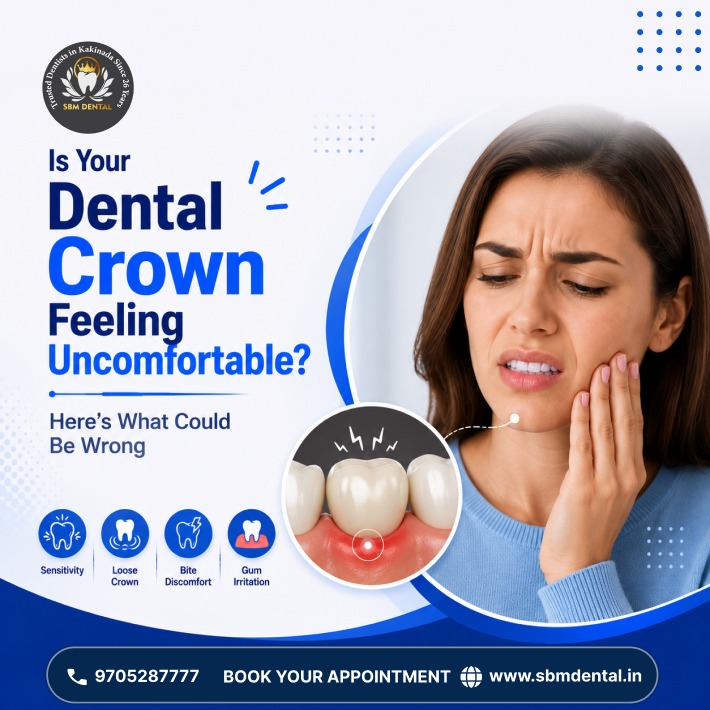
Is Your Dental Crown Feeling Uncomfortable? Here’s What Could Be Wrong
You recently had a dental crown placed, but something doesn’t feel quite right. Perhaps the tooth feels sensitive, your bite feels different, or the crown feels uncomfortable when you chew. A crown should restore the appearance and function of a damaged tooth. However, persistent discomfort should not simply be ignored. An uncomfortable dental crown may have several possible causes.
Why Can a Dental Crown Feel Uncomfortable?
It can take a short period for your mouth to adjust to a new crown. However, ongoing discomfort may indicate an issue that needs to be checked.
Some possible causes include:
- A bite that feels uneven
- Tooth sensitivity
- Irritation around the gum
- Tooth decay underneath the crown
- A loose or damaged crown
- An underlying infection
- A cracked tooth
The cause cannot always be determined without examining the crown and surrounding tooth.
Signs You Shouldn't Ignore
You may notice:
- Pain while biting
- Sensitivity to hot or cold
- Gum swelling
- Redness around the crown
- A loose feeling
- A change in your bite
- Persistent toothache
- Bad taste or unpleasant smell
These symptoms may indicate that the crown or the tooth underneath needs attention.
What Could Happen If You Ignore It?
If the discomfort continues, avoiding the problem may allow an underlying dental issue to progress.
An untreated uncomfortable dental crown may be associated with:
- Damage to the crown
- Tooth decay
- Gum irritation
- Infection
- Difficulty chewing
- Further damage to the underlying tooth
Early assessment can help determine whether the crown needs adjustment, repair, or replacement.
How Can a Dentist Help?
Your dentist can examine the crown, tooth, gums, and your bite.
Depending on the cause, treatment may involve:
- Adjusting the bite
- Treating tooth sensitivity
- Treating gum problems
- Repairing the crown
- Replacing a damaged crown
- Treating infection in the underlying tooth
The appropriate treatment will depend on what is causing the discomfort.
How to Look After Your Dental Crown
Good oral hygiene is important even when a tooth has been restored with a crown.
- Brush twice a day.
- Clean between your teeth daily.
- Avoid chewing extremely hard foods.
- Do not use your teeth to open packages.
- Attend regular dental checkups.
- Contact your dentist if the crown becomes loose.
If your uncomfortable dental crown continues to cause problems, professional advice can help identify the cause.
When Should You Visit a Dentist?
Book an appointment if:
- Pain continues for several days.
- Your crown feels loose.
- You experience pain while biting.
- The gums around the crown are swollen.
- You notice a crack or chip.
- You develop persistent sensitivity.
Prompt treatment can help protect the crown and the tooth underneath it.
Conclusion
A new crown may feel slightly different while your mouth adjusts, but persistent pain, sensitivity, or an unusual bite should not be ignored. If you have an uncomfortable dental crown, arrange a dental examination to determine whether the issue is related to the crown, the tooth underneath, or your bite.
Book your appointment today and get professional advice to keep your restored tooth comfortable and healthy.