Restore Strength and Function to Your Natural Teeth
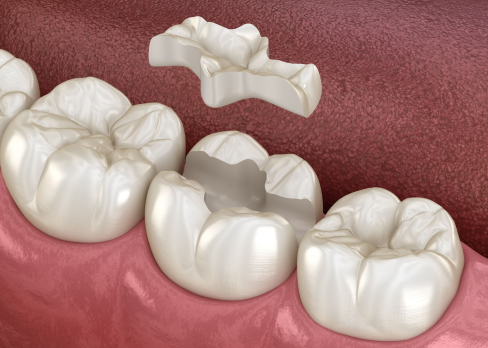
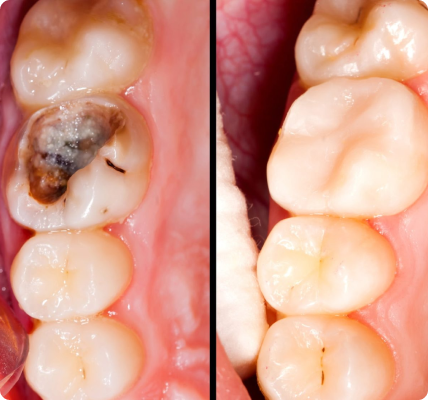
A tooth filling is a dental treatment used to restore a tooth damaged by decay, fracture, or wear. During this procedure, the dentist removes the decayed portion of the tooth and fills the space with a durable restorative material. Teeth fillings help prevent further decay and restore the normal shape, strength, and function of the tooth.Teeth fillings are an ideal option for patients with cavities or minor tooth damage. When placed properly and maintained with good oral hygiene, fillings can last for many years. Modern filling materials are strong, safe, and natural-looking, allowing your restored tooth to blend seamlessly with your natural teeth.
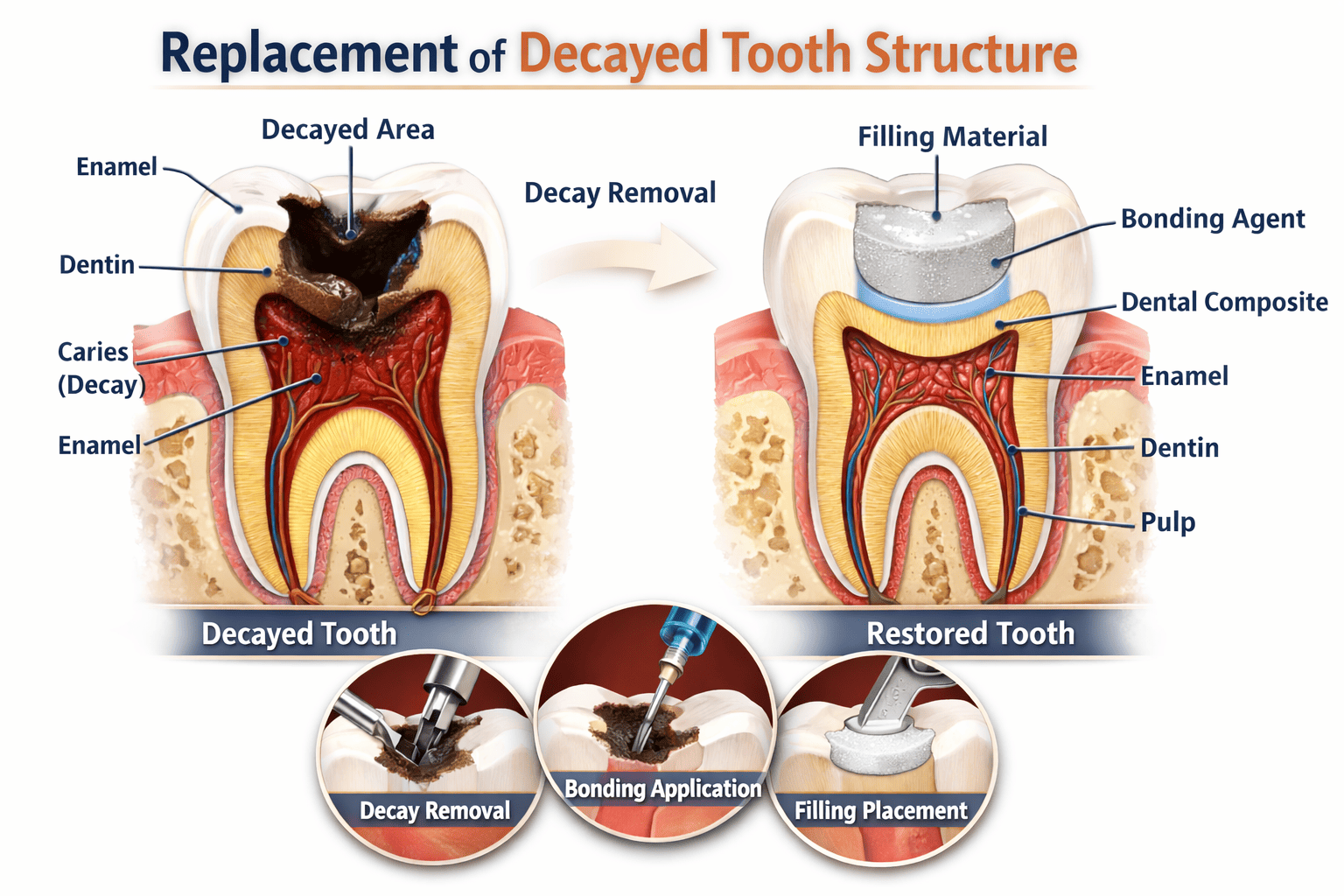
Replacement of Decayed Tooth Structure
When a tooth is affected by decay, the damaged portion must be removed to prevent the spread of bacteria. A dental filling restores the lost tooth structure and seals the tooth from further damage.
Unlike crowns or root canal treatments, fillings are a conservative approach that preserves most of your natural tooth. Early detection and timely filling treatment can save your tooth and prevent complex dental procedures.
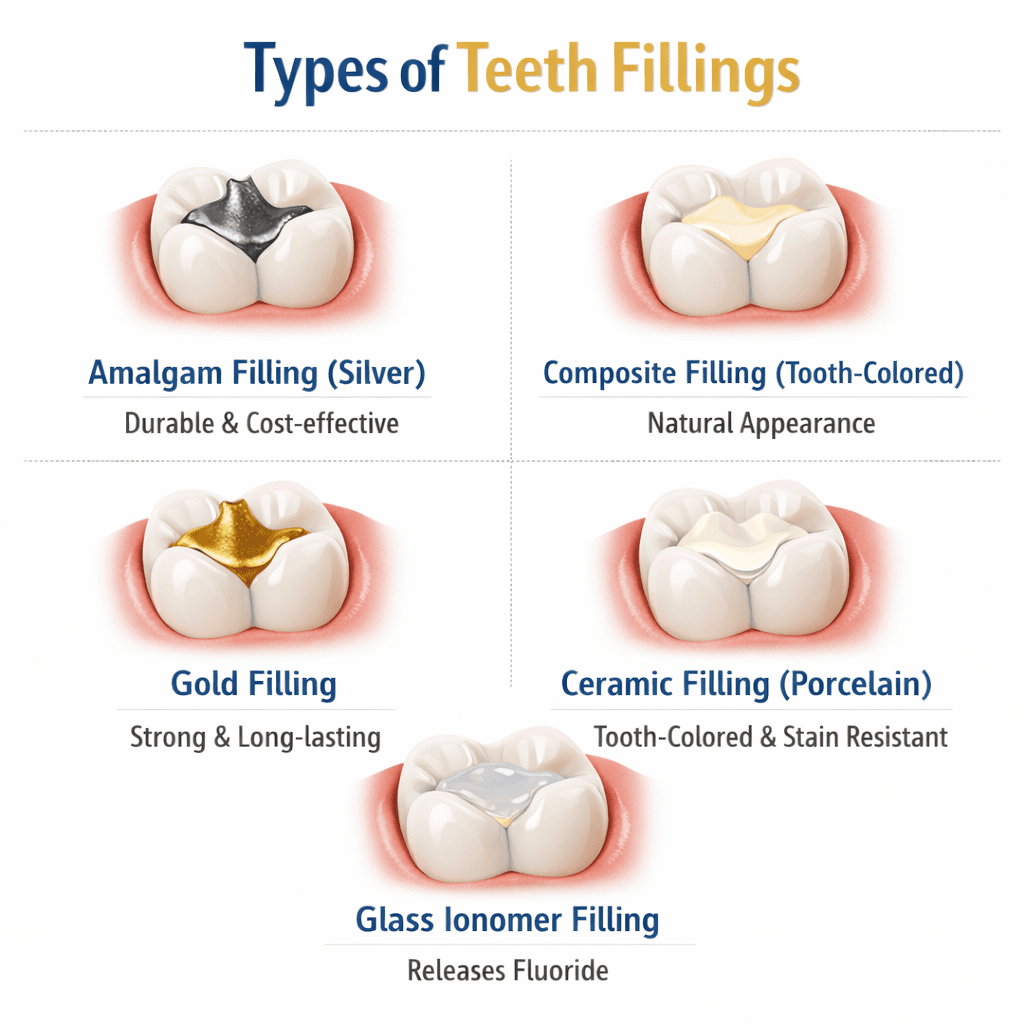
Amalgam Filling (Silver): Strong and durable filling mainly used for back teeth. Cost-effective but noticeable in appearance.
Composite Filling (Tooth-Colored): Matches natural tooth color for a seamless look. Ideal for visible areas but less durable than metal fillings.
Gold Filling: Extremely strong and long-lasting with excellent wear resistance. More expensive and highly visible.
Ceramic Filling (Porcelain): Tooth-colored and highly stain-resistant. Offers a natural look with good durability.
Glass Ionomer Filling: Releases fluoride to help prevent further decay. Best suited for small fillings and children’s teeth.
The Treatment Steps
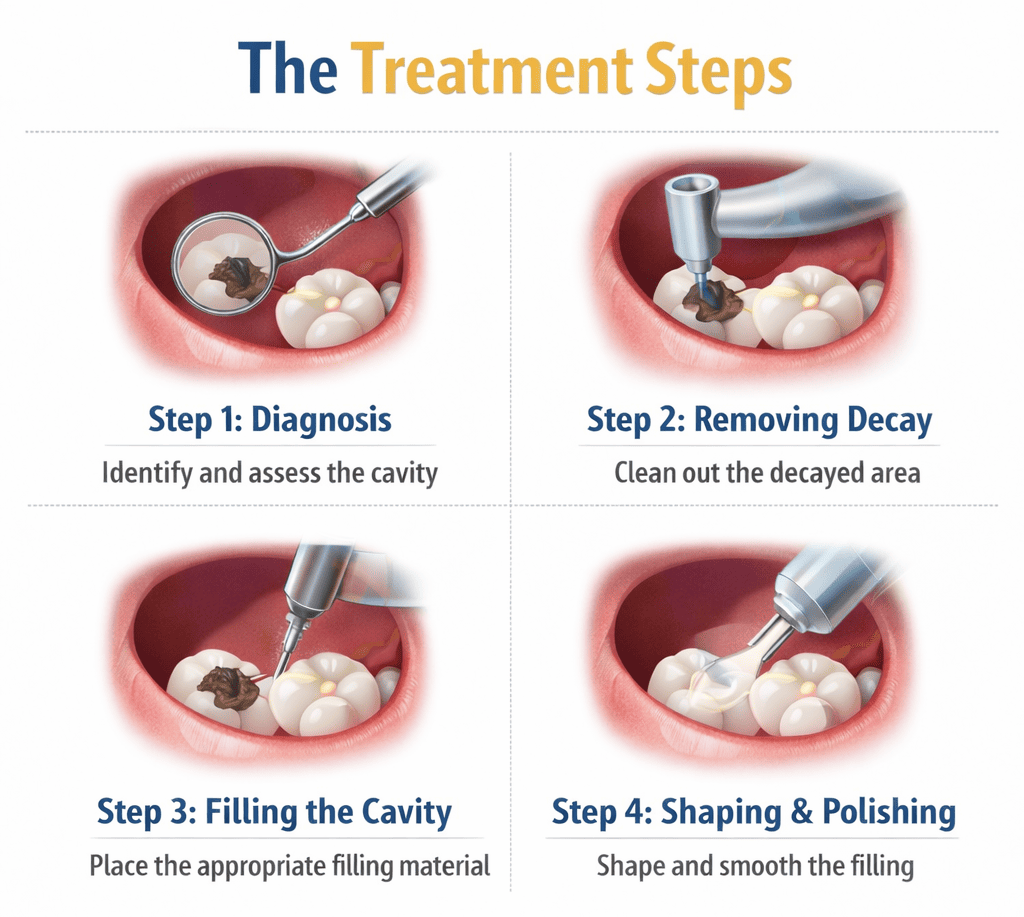
The First Step is a thorough examination of the tooth using clinical evaluation and X-rays if required. The decayed portion of the tooth is carefully removed.
The Second Step involves cleaning the cavity and preparing it for the filling material. This ensures proper bonding and long-term durability.
The Final Step is placing and shaping the filling material to restore the natural contour of the tooth. The filling is hardened and polished so it feels comfortable while biting and chewing.
Replacement of Multiple Cavities
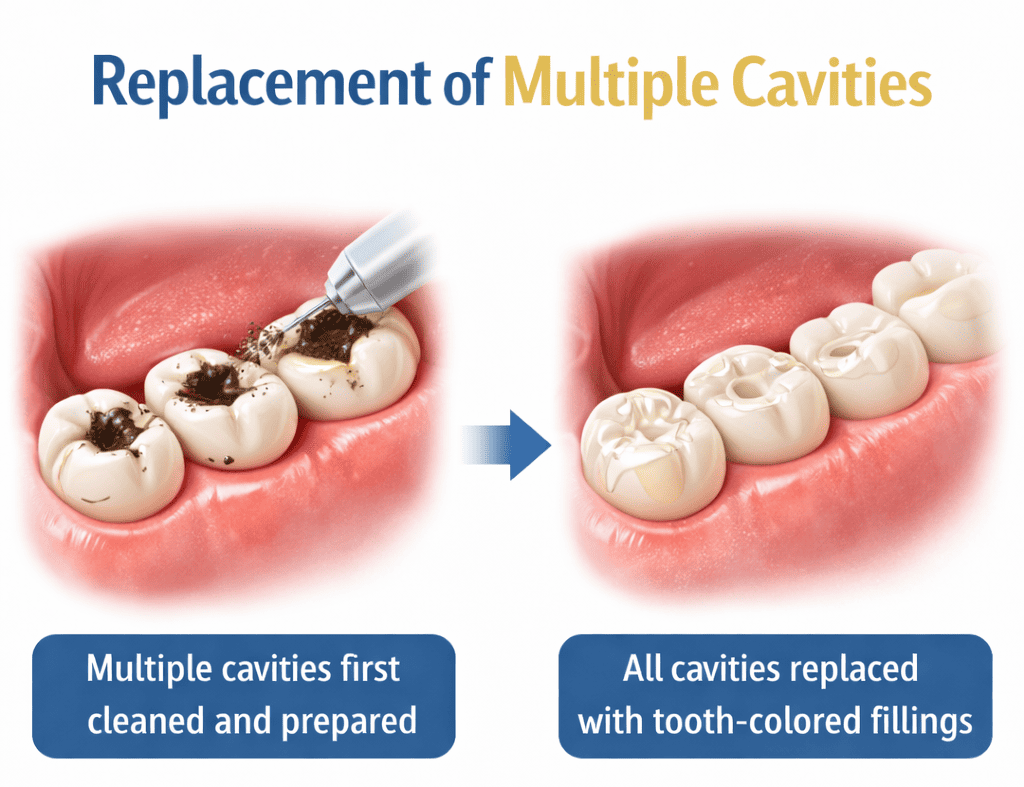
When multiple teeth are affected by decay, timely treatment is essential to prevent further damage and preserve natural teeth. Replacement of multiple cavities involves removing decayed tooth structure from more than one tooth and restoring them with suitable filling materials during one or multiple appointments, depending on the extent of decay.
Treating multiple cavities at the same time helps restore proper chewing function, prevents the spread of bacteria, and improves overall oral health. Modern dental techniques allow precise and conservative removal of decay while maintaining the strength of the remaining tooth structure.
In cases where several cavities are present, the dentist carefully evaluates the location, depth, and number of affected teeth. A customized treatment plan is created to ensure comfort, efficiency, and long-lasting results.
Benefits of Teeth Fillings
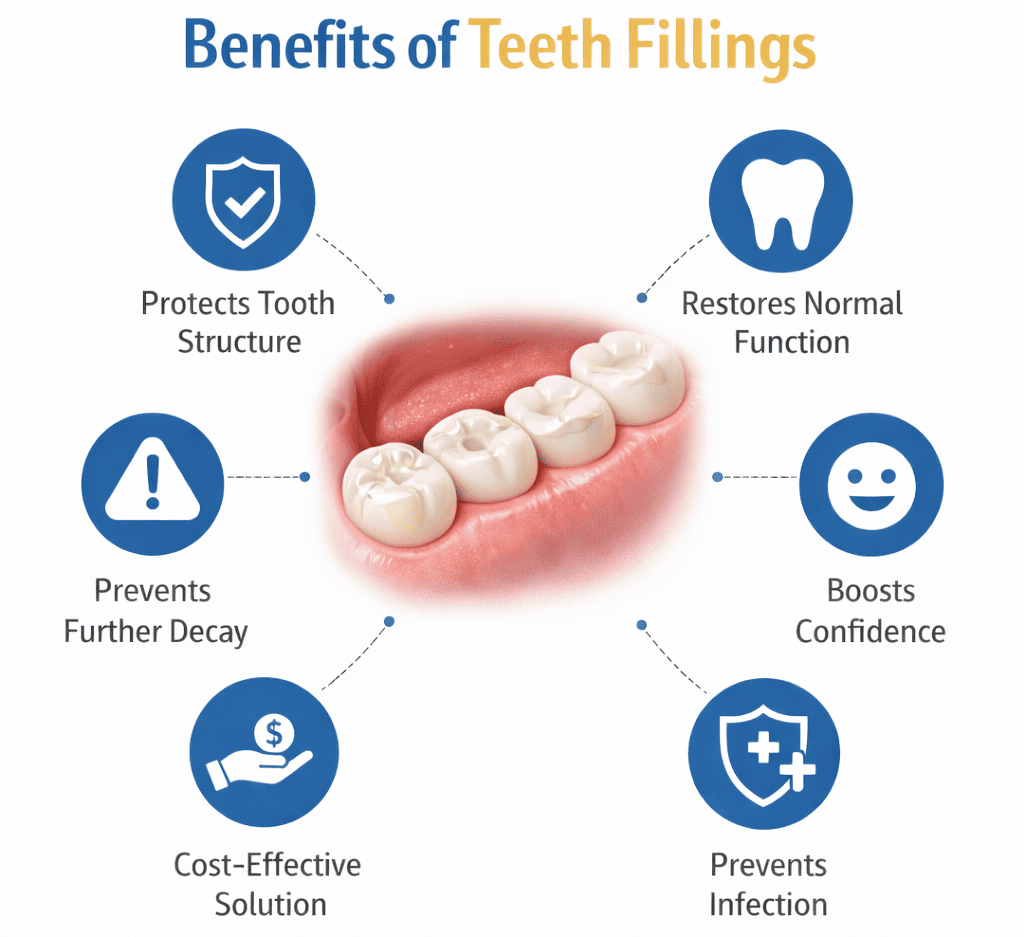
Stops the progression of tooth decay
Restores chewing function
Relieves pain and sensitivity
Preserves natural tooth structure
Improves appearance of damaged teeth
Teeth fillings are a simple yet effective solution for maintaining long-term oral health.
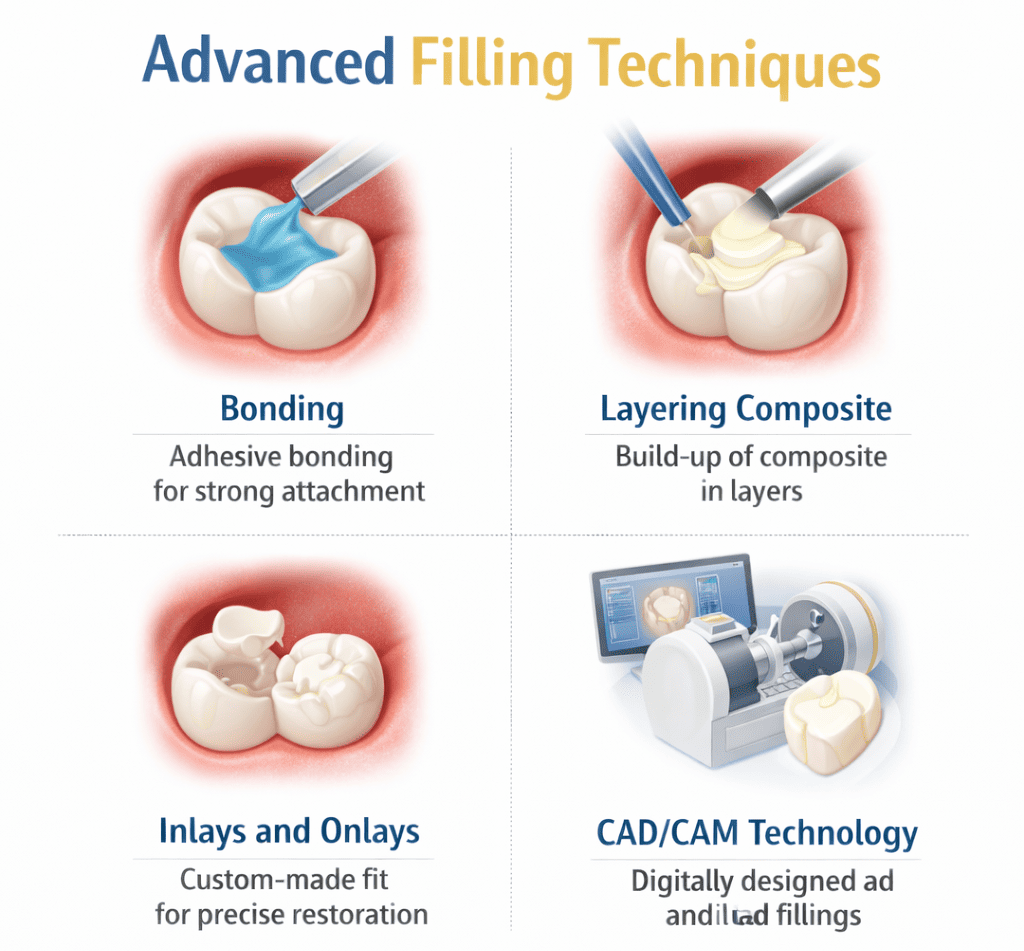
Advanced Filling Techniques
We use modern dental techniques and equipment to ensure:
Minimal discomfort
Precise removal of decay
Strong bonding of filling material
Natural appearance and proper bite alignment
Our focus is on conservative dentistry with maximum tooth preservation.
After Treatment Care
Just like your natural teeth, filled teeth require proper care. To maintain your fillings:
Brush twice daily
Floss regularly
Avoid excessive sugary foods
Visit the dentist for routine check-ups
With proper care, teeth fillings can last many years and continue to protect your teeth.
A teeth filling is a dental treatment used to repair a tooth damaged by decay, cracks, or wear. The decayed portion is removed and replaced with a filling material to restore the tooth’s shape and function.
You may need a teeth filling if you have tooth pain, sensitivity, visible holes or dark spots on teeth, or if your dentist detects a cavity during a routine examination.
The lifespan of a filling depends on the material used, oral hygiene, and biting forces. On average, fillings can last anywhere from 5 to 15 years with proper care.
Common filling materials include composite (tooth-colored) fillings, amalgam (silver) fillings, and glass ionomer fillings. Your dentist will recommend the best option based on your dental condition.
You can usually eat once the numbness wears off. However, it is advised to avoid hard or sticky foods for a few hours, especially after composite fillings.
Fillings can wear out, crack, or loosen over time due to chewing pressure or poor oral hygiene. Regular dental check-ups help detect and fix such issues early.
If left untreated, a cavity can worsen and lead to infection, severe pain, or the need for more complex treatments like root canal therapy or tooth extraction.
Extremely happy and satisfied.. initially I was worried a lot to enter the hospital for my mouth implants. But after a few mins I was very relaxed with the extremely courteous behavior of the whole staff. Efficient and well experienced Dr. Satish garu, other good supporting team of doctors and well trained courteous office staff and painless tratment.. thank you SBM
I had a great experience at SMB Dental, Kakinada. Dr. Savinash treated me with great care and professionalism. My root canal treatment was excellent and virtually painless. He explained every step of the procedure clearly, which made me feel comfortable and confident throughout the treatment.
The clinic is very clean, hygienic, and equipped with advanced dental equipment, making the treatment smooth and efficient. The staff are friendly and supportive, and the overall experience was excellent. I highly recommend SMB Dental to anyone looking for quality dental care in Kakinada.
I was very nervous before getting my two dental implants, but the entire experience turned out to be so comfortable. The way Doctor Sir and the entire team treated me completely took away all my fear and made me feel relaxed throughout the procedure.
A heartfelt thank you to Doctor Sir and the whole team for your kindness, care, and professionalism. I truly appreciate everything you did. Thanks to jyothi garu. Highly recommended!
I had an excellent experience with my dental implant and crowns treatment at SBM dental clinic. Dr.Satish was highly professional, knowledgeable and experienced. He made me feel comfortable throughout the process by explaining every step in detail. The implants process was painless and completed whole the service within a very short period of span. I’m very happy with the results and would highly recommend this clinic to anyone. Thank you SBM for the outstanding care and excellent service!
Life-changing smile restored with expert dental implants at SBM Dental Hospital. Precise planning, comfortable treatment, and confident results.Highly recommend for anyone looking for trusted implant care in kakinada. Thank you so much SBM team.
Iam SVSS PRAKASH. My wife Satyavathi under went rootcanal treatment in SBM dental clinic,bhanugudi,Kakinada. Dr. Syam garu gave excellent treatment, with out any pain and smoothly. Dr. Pratyusha garu explained full condition of teeth. The doctors inthis hospital take good care of their patients. We proudly say the medical staff and non medical staff are very amicable. I suggest every one , this is the best dental hospital in Kakinada.
Great care. Dr Satish is very accommodative and the staff as well. I did have an impacted wisdom tooth extracted, it was done with extra care and have been following up on how I was doing. It was very nice of the team. Thank you so much. Definitely recommend for others.
I had an excellent experience at SBM Dental Hospital! The staff is professional, friendly, and incredibly welcoming, which immediately put me at ease. Dr. Satish is thorough, knowledgeable, and explains every procedure in a clear, reassuring way. The office is clean, modern, and well-organized, making visits comfortable and stress-free. I’ve always been nervous about dental appointments, but this team made the whole process smooth and even pleasant. I highly recommend Dr. Satish to anyone looking for a caring and skilled dentist!
I visited SBM Dental Hospital for a tooth implant consultation and had a very good experience. Dr. Sathish sir was kind, patient, and explained the procedure clearly in simple terms. The hospital is fully equipped with all facilities like OPG X-ray and CBCT scan. The consultation was affordable, and the clinic was clean, well-maintained, and supported by friendly staff. A great place for anyone looking for quality dental care!
I had a very positive experience at this hospital. From the moment I arrived, the staff was welcoming, professional, and attentive. The doctors were highly knowledgeable and took the time to explain everything clearly, which made me feel comfortable and well cared for.
The nursing team was incredibly kind and responsive throughout my stay. Cleanliness was top-notch, and all facilities were modern and well-maintained. I also appreciated how organized everything was, especially with appointments and follow-ups.
Overall, I’m very thankful for the excellent care I received and would highly recommend this hospital to anyone looking for quality medical treatment.
I have visited SBM Dental hospital for my clip treatment. I have got aligners on suggetion of orthodontist. I am very happy and satisfied. With in few weeks I saw that my teeth started getting corrected. I'm very thankful to my orthodontist and the premium services offered at Sri Bhavani multi-speciality dental hospital. My smile has improved so much!!🤩