

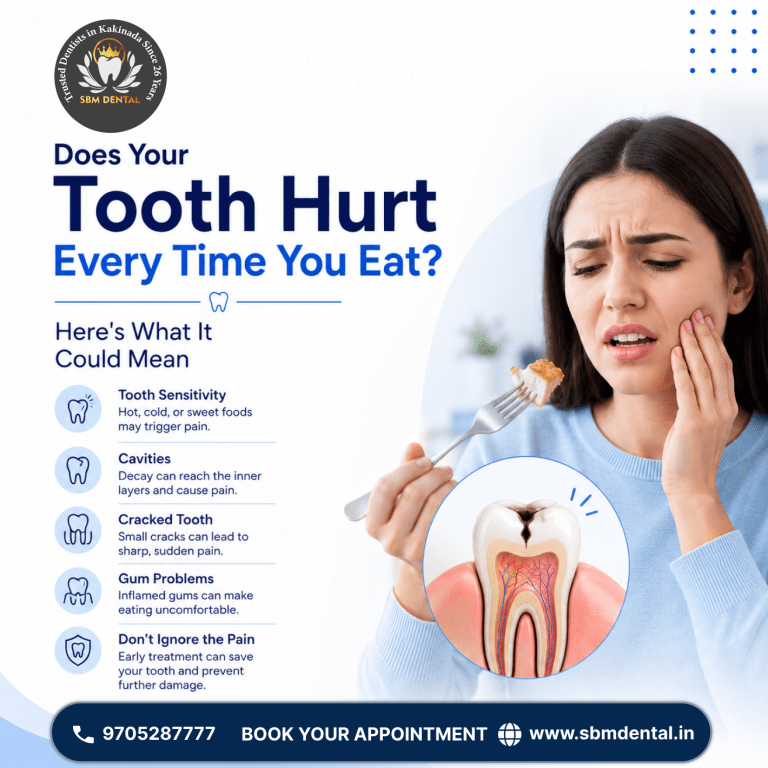
Does Your Tooth Hurt Every Time You Eat? Here’s What It Could Mean
You’re finally sitting down to enjoy your favorite meal. You take the first bite, expecting to enjoy every mouthful—but instead, a sharp pain shoots through one of your teeth. You pause, hoping it’s just a one-time thing. The next meal comes, and it happens again. Soon, you find yourself chewing on only one side of your mouth or avoiding certain foods altogether.
If this sounds familiar, you’re not alone. Tooth Pain While Eating is one of the most common reasons people visit a dentist. While the pain may seem minor at first, it often signals that your teeth are trying to tell you something important.
Why Does Your Tooth Hurt While Eating?
Every time you bite down, your teeth and gums work together to handle pressure. If one part of your tooth is damaged or inflamed, even a simple meal can become uncomfortable.
Some common reasons behind Tooth Pain While Eating include:
- Tooth decay reaching the inner layers of the tooth
- Cracked or chipped teeth
- Worn-out dental fillings
- Gum infection or swelling
- Tooth sensitivity
- Teeth grinding that weakens the enamel
Ignoring these problems rarely makes them disappear. In many cases, they gradually become worse.
Signs You Shouldn't Ignore
Pain doesn’t always stay the same. At first, it may only happen while eating, but over time you might notice:
- Pain when chewing hard foods
- Sensitivity to hot or cold drinks
- Sharp pain while biting
- Swelling around the affected tooth
- Food getting stuck in one area
- Persistent discomfort after meals
These are warning signs that your mouth needs professional attention.
What Could Happen If You Ignore It?
Many people wait until the pain becomes unbearable before visiting a dentist. Unfortunately, delaying treatment can allow a small problem to become a bigger one.
Untreated Tooth Pain While Eating may lead to:
- Deep cavities
- Tooth infection
- Gum disease
- Damage to the tooth nerve
- Difficulty eating and speaking
- The need for more complex dental treatments
The earlier the problem is diagnosed, the simpler the treatment usually is.
How Can a Dentist Help?
The right treatment depends on the cause of your pain. After examining your teeth, your dentist may recommend:
- Dental fillings for cavities
- Professional cleaning for gum problems
- Treatment for cracked or damaged teeth
- Root canal treatment if the tooth nerve is infected
- A dental crown to restore a weakened tooth
Early treatment not only relieves pain but also helps preserve your natural tooth.
How to Protect Your Teeth
While not every dental problem can be prevented, these healthy habits can reduce your risk:
- Brush twice a day with fluoride toothpaste.
- Floss daily to remove food between teeth.
- Avoid chewing very hard foods or ice.
- Limit sugary snacks and drinks.
- Visit your dentist regularly for checkups.
- Never ignore recurring Tooth Pain While Eating.
Simple daily care goes a long way in protecting your smile
When Should You Visit a Dentist?
Don’t wait for the pain to become severe.
Book a dental appointment if:
- The pain returns every time you eat.
- You experience swelling around the tooth.
- You notice sensitivity lasting several days.
- Chewing becomes difficult.
- Pain wakes you up at night.
Prompt treatment can prevent further damage and help restore comfortable eating.
Conclusion
Food should be something you enjoy—not something you fear. If every bite brings discomfort, your teeth may be warning you about an underlying problem. Whether it’s a cavity, a cracked tooth, or gum disease, Tooth Pain While Eating should never be ignored. Seeking professional dental care early can relieve pain, prevent complications, and help you get back to enjoying your meals with confidence. Book your appointment today and discover the benefits of a confident, beautiful smile!