


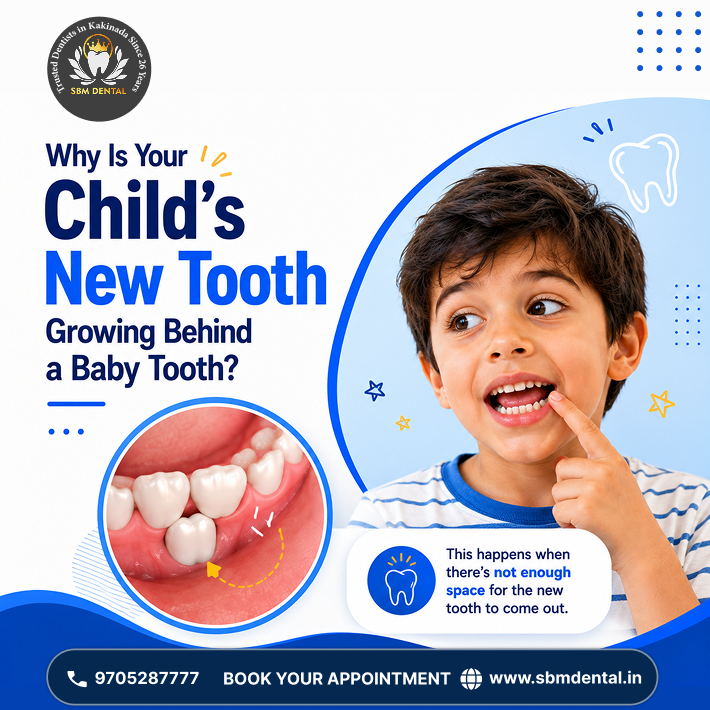
Why Is Your Child’s New Tooth Growing Behind a Baby Tooth?
Your child smiles at you, and you notice something unusual. A new permanent tooth appears to be growing behind a baby tooth that has not fallen out yet. This can be surprising for parents and may immediately raise concerns about whether the tooth is growing correctly. A child tooth growing behind a baby tooth can sometimes happen when the permanent tooth begins to erupt before the baby tooth has fallen out. Although it may look unusual, a dentist should assess the situation to determine what is happening.
Why Can a Permanent Tooth Grow Behind a Baby Tooth?
Normally, baby teeth become loose as permanent teeth develop underneath them. The roots of the baby tooth gradually dissolve, allowing it to fall out and make room for the permanent tooth.
Sometimes, however, the permanent tooth may develop slightly behind or to the side of the baby tooth.
Some possible reasons include:
- The baby tooth has not become loose yet
- The permanent tooth is developing in a different position
- Lack of space
- Delayed loss of the baby tooth
- Natural differences in tooth development
A child tooth growing behind a baby tooth does not always mean there is a serious problem, but it is worth having your child’s teeth checked.
Signs Parents Should Watch For
Parents may notice:
- A new tooth appearing behind another tooth
- A baby tooth that remains firmly in place
- Crowding
- Difficulty cleaning around the teeth
- Food getting trapped
- Changes in the position of nearby teeth
Regular dental visits allow your child’s dentist to monitor how their teeth are developing.
What Could Happen If You Ignore It?
In some cases, the baby tooth may eventually become loose and fall out naturally. However, if the situation persists, it may affect the position of the permanent tooth.
An untreated child tooth growing behind a baby tooth may sometimes be associated with:
- Crowding
- Difficulty cleaning the area
- Plaque buildup
- Gum irritation
- Changes in tooth alignment
Early dental assessment can help determine whether treatment is necessary.
How Can a Dentist Help?
Your dentist will examine your child’s teeth and monitor their development. Depending on the situation, the dentist may recommend:
- Monitoring the tooth
- Checking the position of the permanent tooth
- Removing a retained baby tooth when appropriate
- Assessing available space
- Orthodontic evaluation if required
Treatment will depend on your child’s age, tooth development, and individual dental needs.
How Can Parents Support Healthy Teeth?
Good oral hygiene is important while children are losing baby teeth and developing permanent teeth.
- Help your child brush twice a day.
- Use fluoride toothpaste appropriate for their age.
- Encourage daily cleaning between teeth where suitable.
- Limit frequent sugary snacks and drinks.
- Encourage regular dental checkups.
- Avoid trying to pull out a tooth forcefully at home.
If you notice a child tooth growing behind a baby tooth, professional advice can help you understand whether the tooth needs monitoring or treatment.
When Should Your Child Visit a Dentist?
Arrange a dental appointment if:
- A permanent tooth appears before the baby tooth falls out.
- Your child experiences pain.
- The gums appear swollen.
- Your child has difficulty eating.
- The teeth appear crowded.
- You are concerned about your child’s tooth development.
Early monitoring can help support healthy dental development.
Conclusion
Seeing a permanent tooth appear behind a baby tooth can be worrying for parents, but it does not always indicate a serious problem. Children’s teeth develop at different rates, and a dentist can determine whether the tooth is likely to move into position naturally or needs further attention. If you notice a child tooth growing behind a baby tooth, arrange a dental checkup rather than trying to manage the situation yourself.