

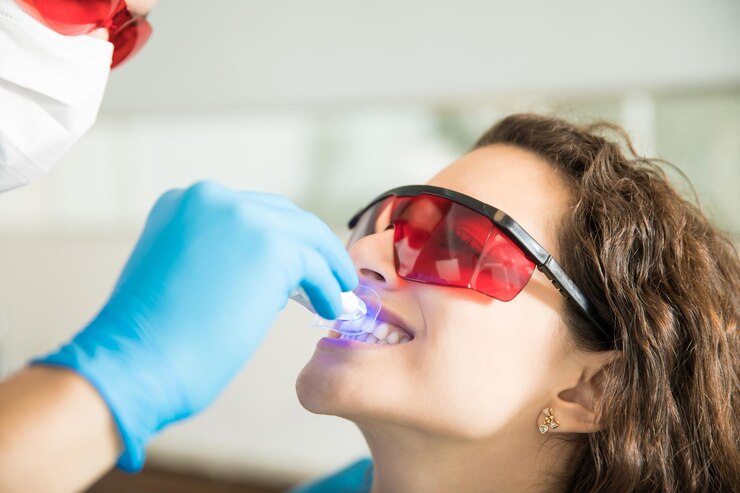
Tooth cleaning, also known as professional dental cleaning or scaling, is a preventive dental procedure performed to remove plaque, tartar, and stains from teeth. Professional Tooth Cleaning in Kakinada helps maintain oral hygiene, prevents gum disease, and keeps your smile fresh and healthy.
Even with regular brushing and flossing, plaque can build up in hard-to-reach areas. Over time, this plaque hardens into tartar, which cannot be removed at home. Professional tooth cleaning is essential to prevent dental problems and maintain long-term oral health.
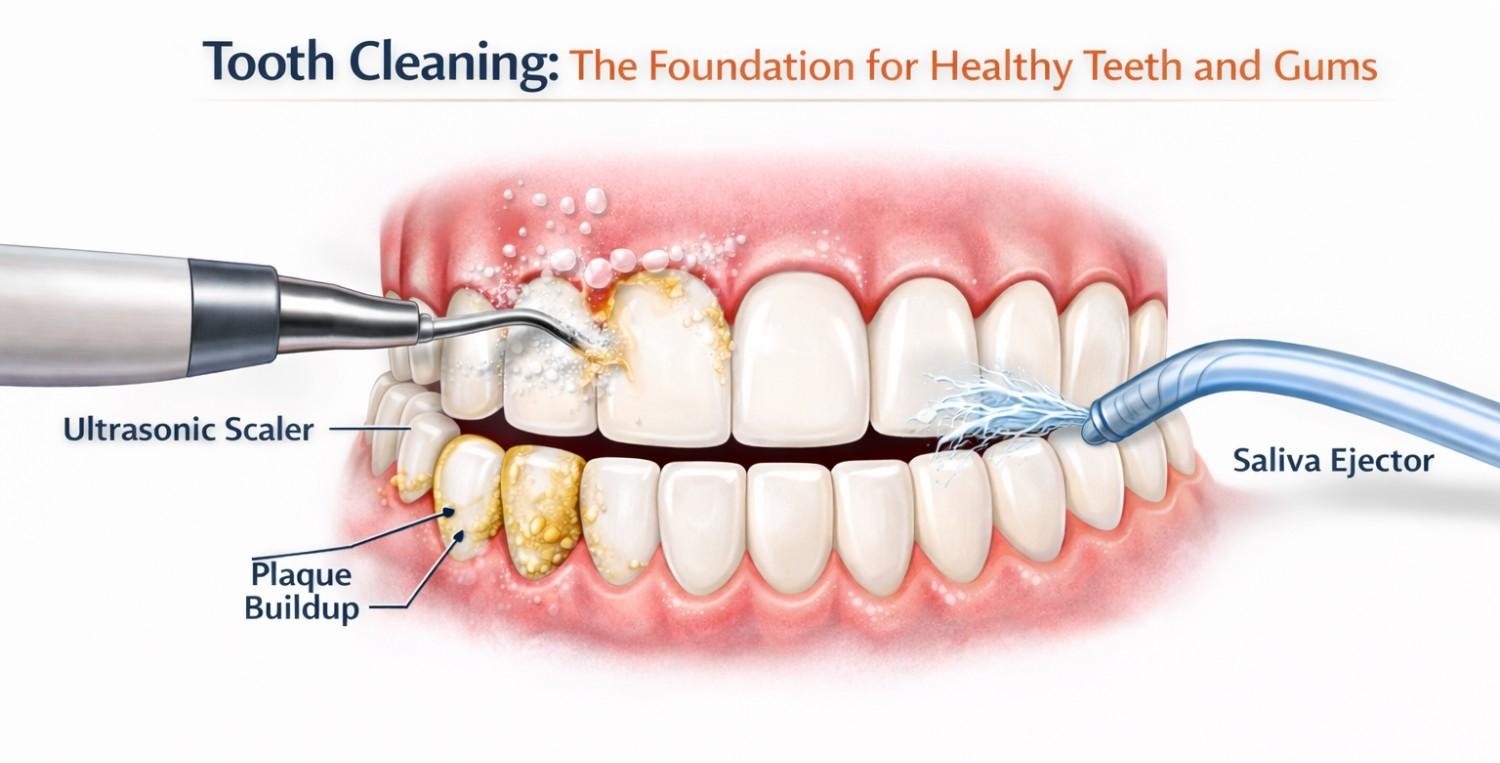
Your oral health plays a vital role in your overall well-being. Poor oral hygiene can lead to gum disease, bad breath, cavities, and even tooth loss.
You may need professional tooth cleaning if:
Regular Tooth Cleaning in Kakinada helps you smile, speak, and eat comfortably with confidence.
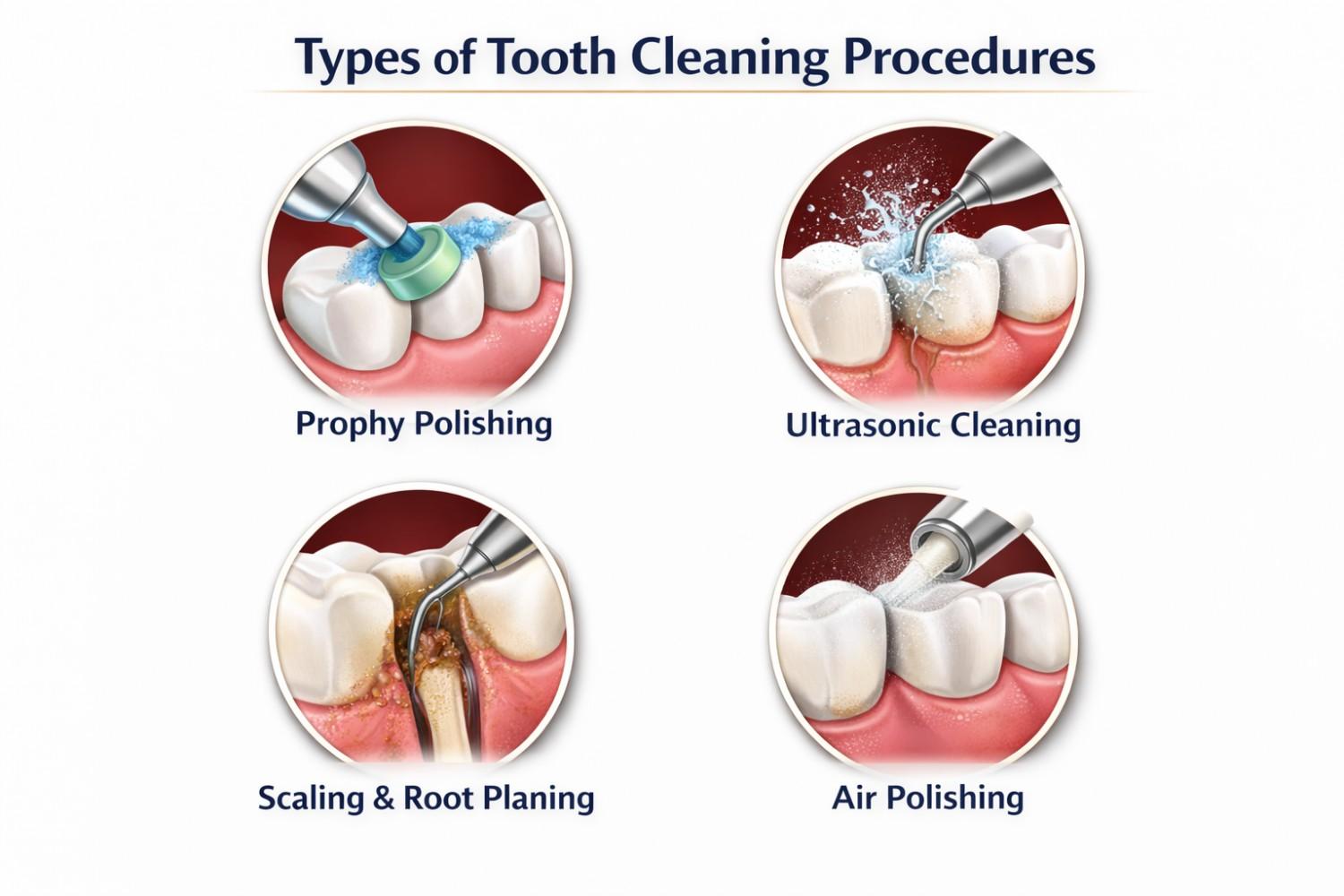
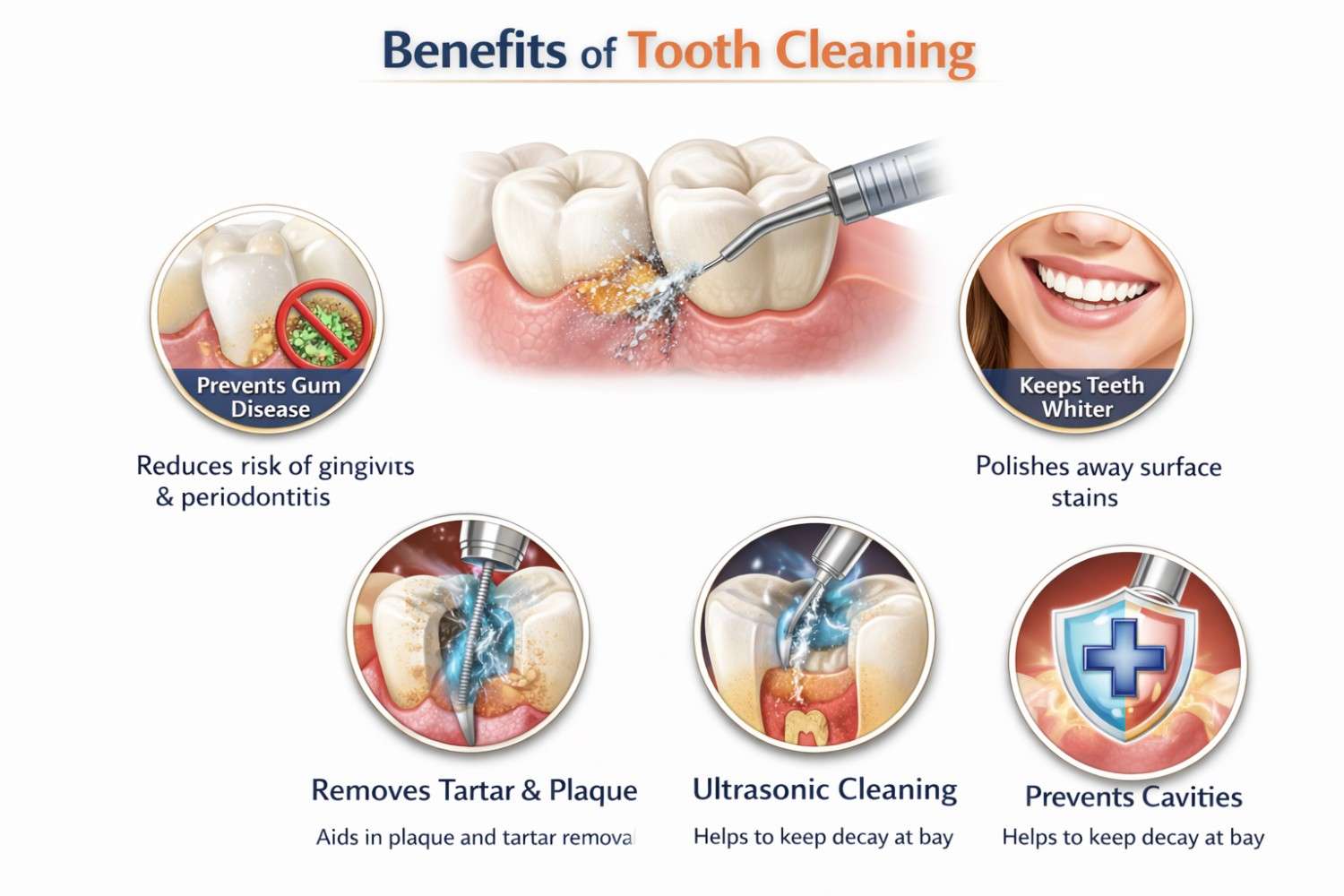
With regular Tooth Cleaning in Kakinada, you can avoid complex dental treatments in the future.
Tooth cleaning is recommended for:
Your dentist will advise how frequently you should undergo professional cleaning based on your oral condition.
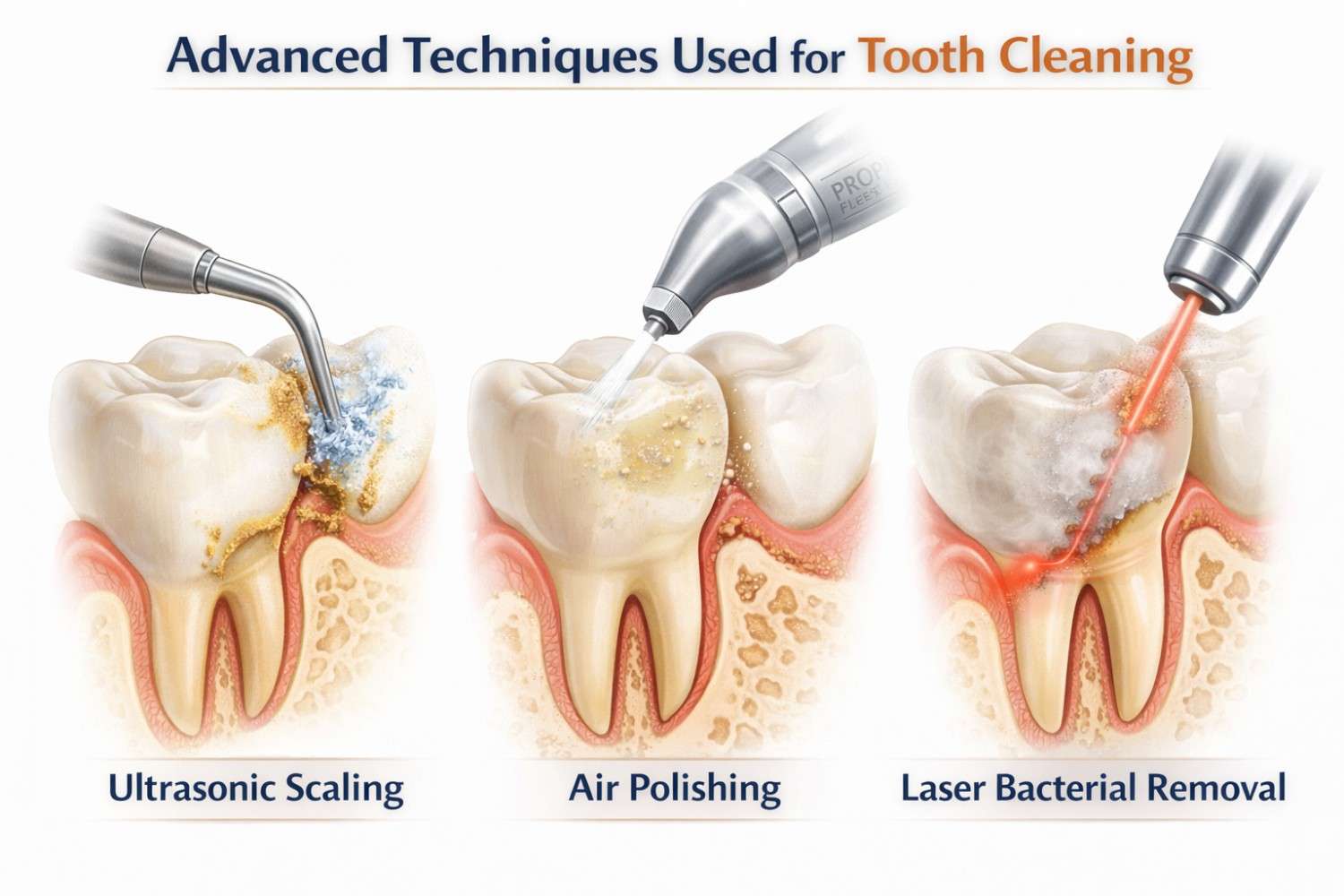
Professional tooth cleaning results in healthier gums, cleaner teeth, fresher breath, and a brighter smile. Patients often experience improved comfort while eating and speaking, along with increased confidence.
Just like your natural teeth, maintaining results after tooth cleaning requires proper care:
With regular care and professional Tooth Cleaning in Kakinada, your teeth can remain healthy for a lifetime.
Tooth cleaning is a professional dental procedure that removes plaque, tartar, and stains from teeth. It helps maintain healthy gums and prevents dental problems such as cavities and gum disease.
Most people should undergo professional tooth cleaning once every six months. However, patients with gum disease or heavy plaque buildup may require more frequent cleanings as advised by the dentist.
Tooth cleaning is generally painless. Some patients may experience mild discomfort or sensitivity, especially if there is heavy tartar buildup or gum inflammation, but it is temporary.
No, professional tooth cleaning does not damage teeth. It safely removes harmful deposits that brushing and flossing cannot eliminate, helping protect your teeth and gums.
Yes, tooth cleaning can remove surface stains caused by tea, coffee, smoking, and food habits. However, it does not change the natural color of teeth like teeth whitening.
Some patients may experience temporary sensitivity after tooth cleaning, especially if tartar was removed from below the gum line. This usually resolves within a few days.
Yes. Even with regular brushing and flossing, plaque can build up in hard-to-reach areas and turn into tartar, which can only be removed through professional tooth cleaning.
Yes, tooth cleaning is safe and recommended for children. Regular cleaning helps prevent cavities and teaches children the importance of good oral hygiene.
A routine tooth cleaning session usually takes about 30 to 45 minutes. Deep cleaning procedures may take longer depending on the condition of the teeth and gums.
After tooth cleaning, it is best to avoid smoking, tobacco, and strongly colored foods or beverages for a few hours. Maintaining good oral hygiene helps preserve the results.
Posted onTrustindex verifies that the original source of the review is Google. I had filling treatment done in Sbm dental hospital by Dr Savinash and Dr Prathyusha, and my experience was excellent too goodPosted onTrustindex verifies that the original source of the review is Google. Excellent service. Highly recommend this dental clinic for all your dental needs.Posted onTrustindex verifies that the original source of the review is Google. Had a great experience for scaling and fillings treatment. The procedure was very smooth and comfortable. Doctor ensured I was relaxed throught clinic atmosphere is clean and well maintained and highly satisfied in kakinadaPosted onTrustindex verifies that the original source of the review is Google. I recently had a root canal treatment and tooth extraction done by dr. Savinash and i am very satisfied with the treatment the doctor was very patient kind and explained the entire procedure clearly before starting i was very nervous at furst but he made me feel comfortable and calm throught the process the root canal treatment was done smoothly with very minimal pain and the extraction was also handled carefully and professionally the clinic was clean and well maintained and the staff were friendly and supportive and i highly reccomeded the hospital in kakinadaPosted onTrustindex verifies that the original source of the review is Google. Very much satisfied with my wisdom teeth removal procedure by Dr. Savinash. He is really skilled and highly professional; effectively communicating crystal clear operative and post op information and instructions. He was very patient throughout, addressing all of my concerns and clarifying even the slightest of doubts. The staff was amazing and supportive. Will highly recommend Dr. Savinash to everyone thinking of getting dental procedures in Kakinada!Posted onTrustindex verifies that the original source of the review is Google. Excellent dental clinic! Doctors and staff are very friendly and professional clinic is clean and treatment was painless.i felt very comfortable. Highly recommendPosted onTrustindex verifies that the original source of the review is Google. ExcelentPosted onTrustindex verifies that the original source of the review is Google. Excellent treatment, and best hospital in kakinadaPosted onTrustindex verifies that the original source of the review is Google. I satisfied with all service I received.. Good and excellent servicePosted onTrustindex verifies that the original source of the review is Google. Excellent treatment, painless treatment, Dr.savinash garu