


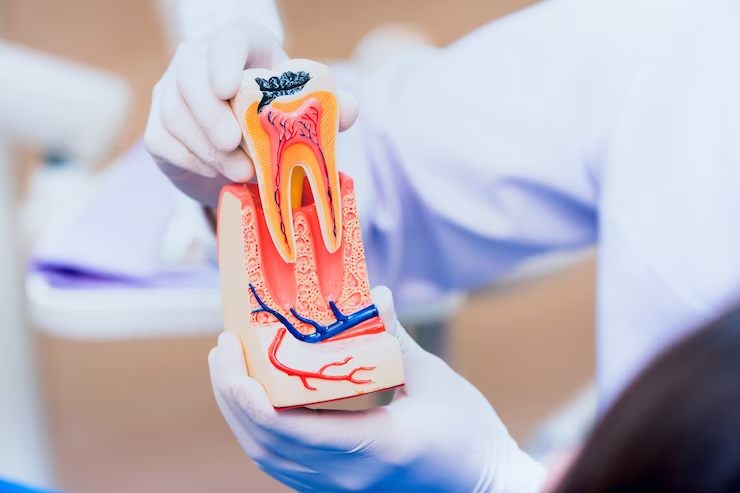
Root Canal Treatment in Kakinada
Root Canal Treatment:
Saving Your Natural Tooth
Root canal treatment is a dental procedure used to save a severely infected or damaged tooth. When the inner pulp of a tooth becomes infected due to deep decay, cracks, repeated dental procedures, or trauma, root canal treatment helps eliminate infection and preserve the natural tooth. With modern techniques, Root Canal Treatment in Kakinada is safe, effective, and virtually painless.
Saving your natural tooth helps maintain proper chewing function, natural appearance, and overall oral health.
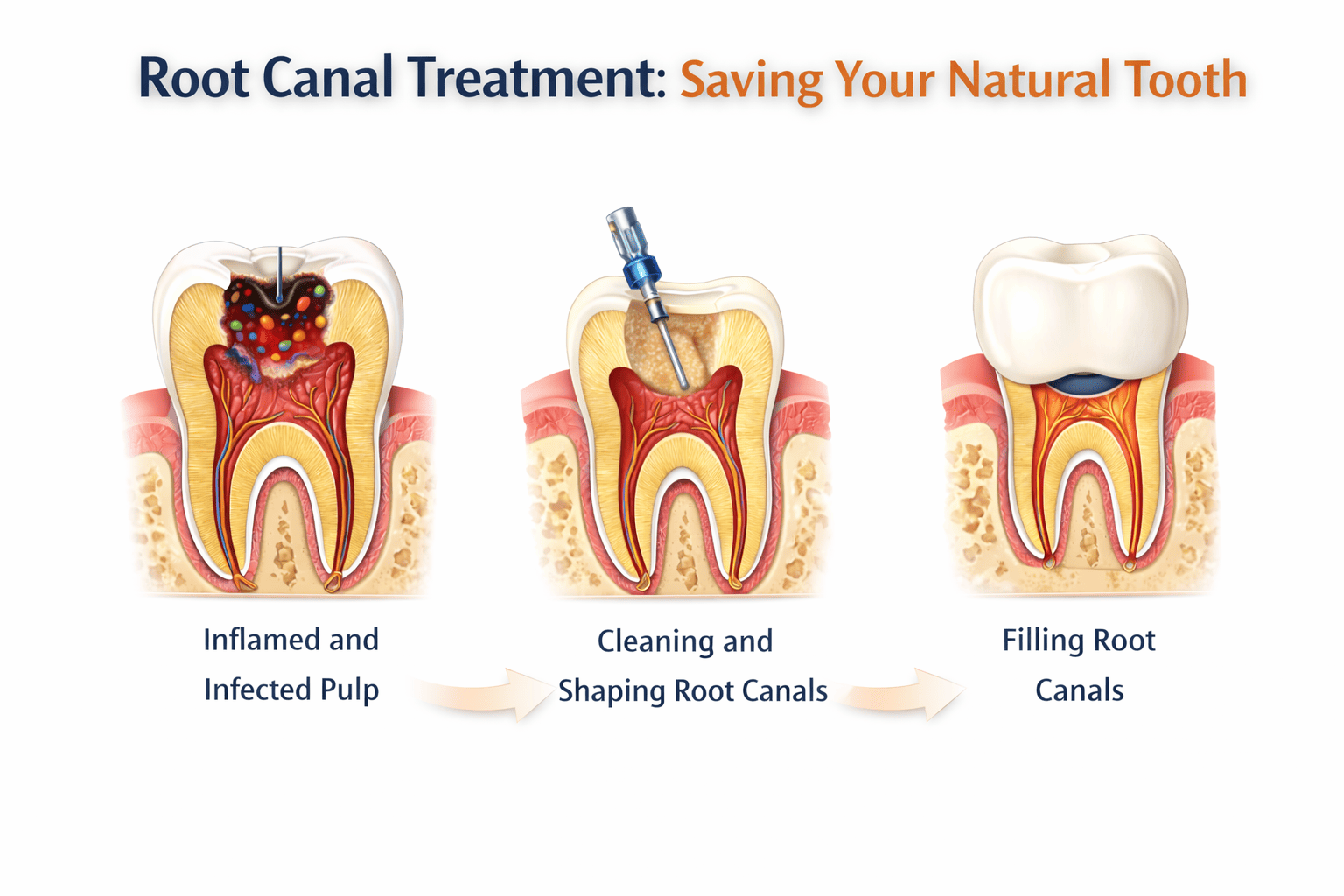
What Is Root Canal Treatment?
Root canal treatment involves removing the infected or inflamed pulp from inside the tooth, cleaning and disinfecting the root canals, and sealing them with a biocompatible material. The treated tooth is then restored with a filling or crown to protect it and restore full function.
Root canal treatment helps eliminate pain and prevents the need for tooth extraction.
Why Is Root Canal Treatment Needed?
You may require root canal treatment if you experience:
- Severe toothache while chewing or biting
- Prolonged sensitivity to hot or cold
- Swelling or tenderness in the gums
- Darkening or discoloration of the tooth
- Pimple-like swelling on the gums
If left untreated, the infection can spread and lead to abscess formation and bone damage.
Root Canal Treatment Procedure
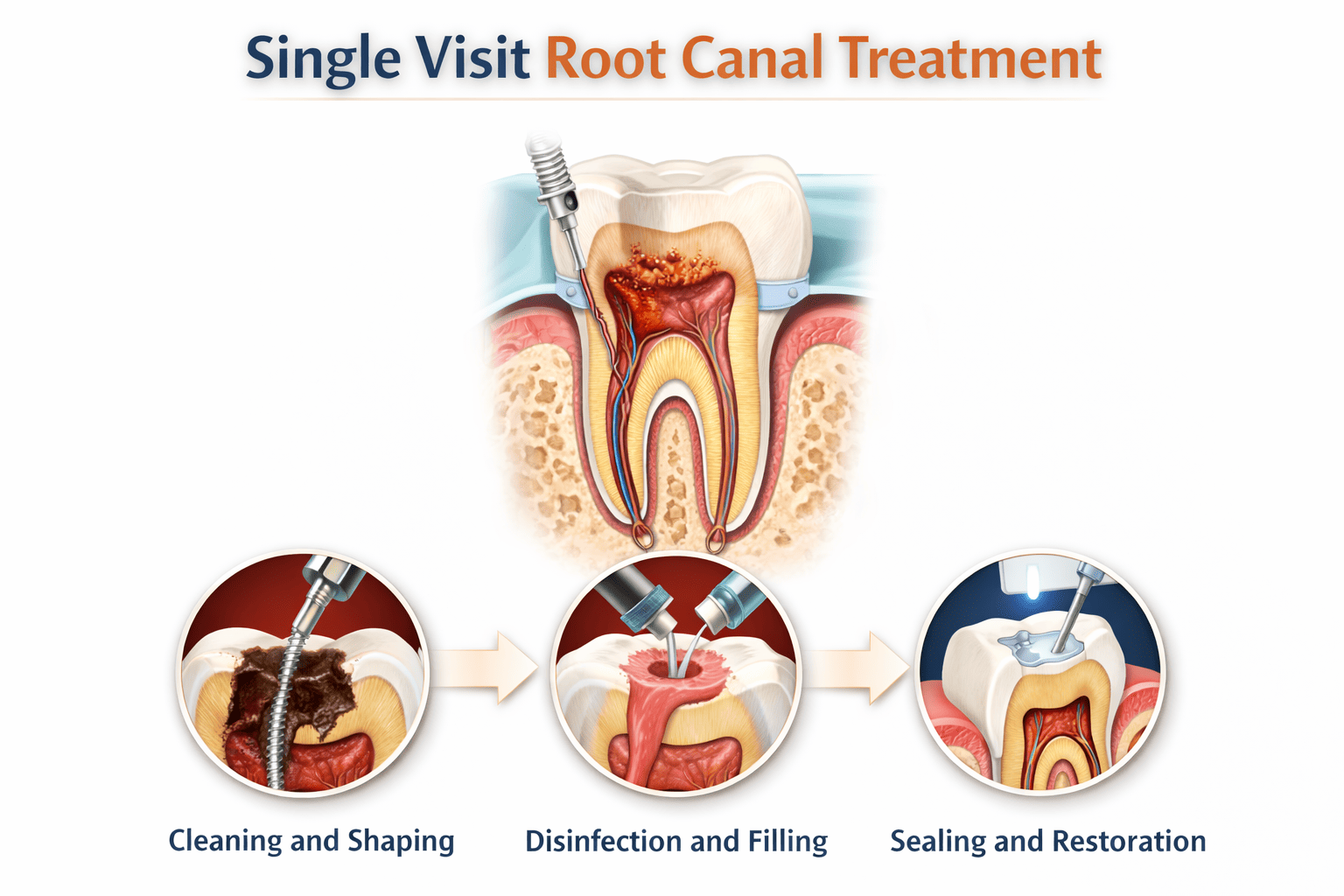
Step 1: Removal of Infected Pulp
The dentist creates a small opening in the tooth and removes the infected pulp tissue from the root canals.Step 2: Cleaning and Shaping
The canals are thoroughly cleaned, disinfected, and shaped to prepare them for filling.Step 3: Filling and Sealing
The cleaned canals are filled with a special material and sealed to prevent reinfection.Step 4: Final Restoration
A crown or permanent filling is placed to restore strength, shape, and function of the tooth.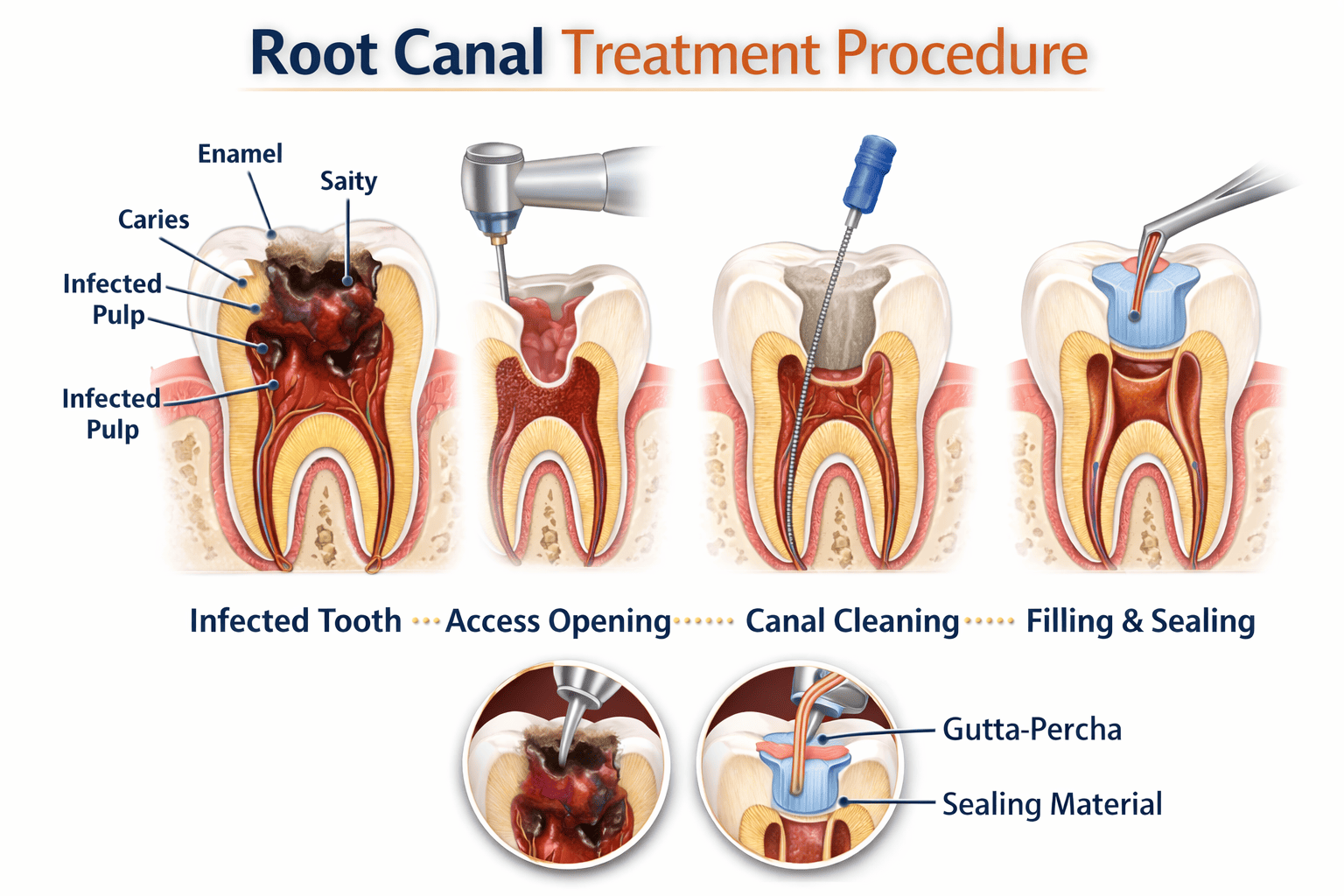
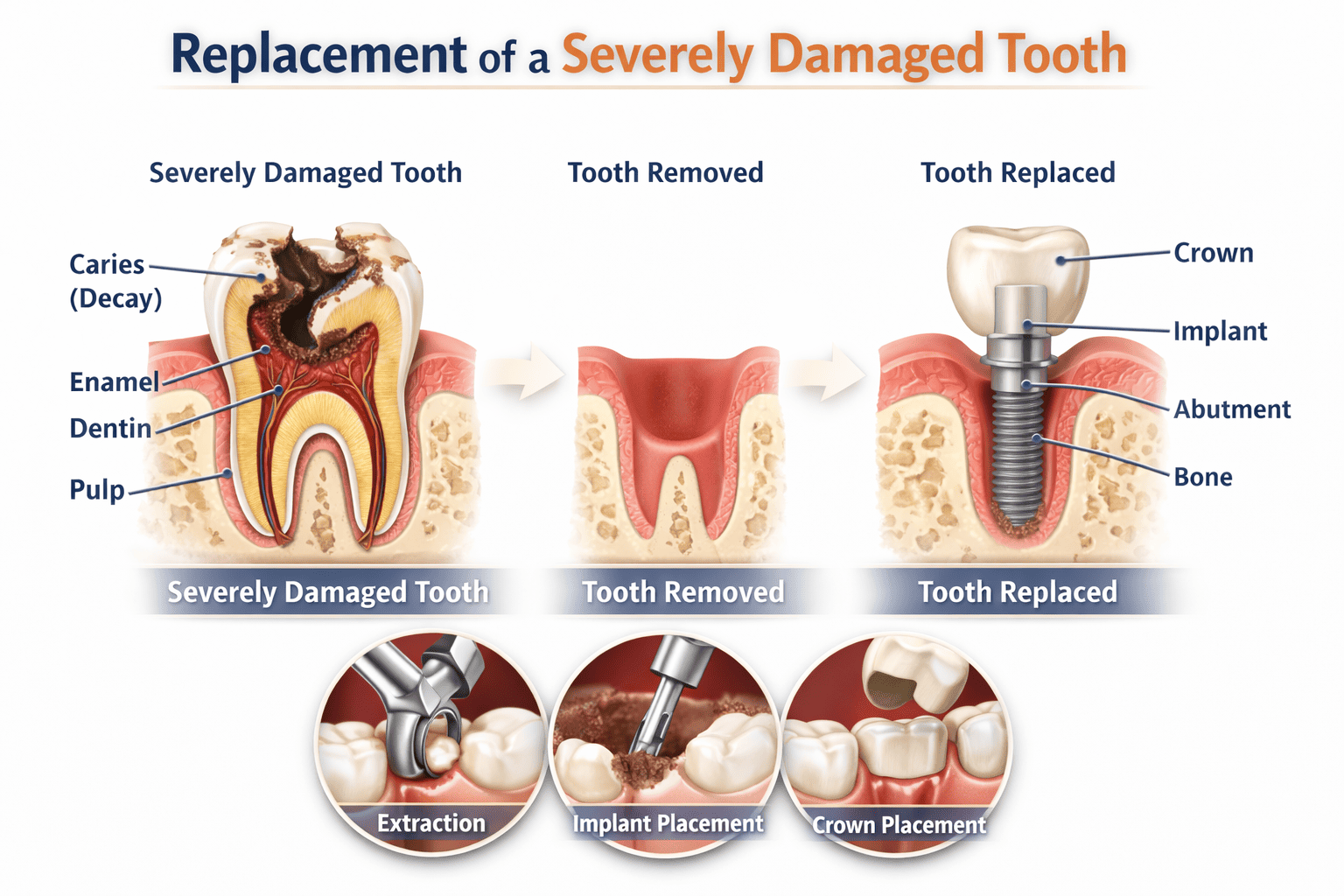
Replacement of a Severely Damaged Tooth
In cases where the tooth structure is significantly weakened after root canal treatment, a dental crown is recommended. The crown protects the tooth from fracture and restores natural appearance and chewing ability.
Root canal treatment followed by crown placement allows the tooth to function just like a natural tooth.
Single Visit Root Canal Treatment
With advanced equipment and modern techniques, many root canal treatments can be completed in a single visit. This reduces treatment time and provides faster pain relief.
Root Canal Treatment for Multiple Teeth
When infection affects more than one tooth, each tooth is evaluated individually. Root canal treatment helps save multiple teeth and prevents the spread of infection, preserving overall oral health.
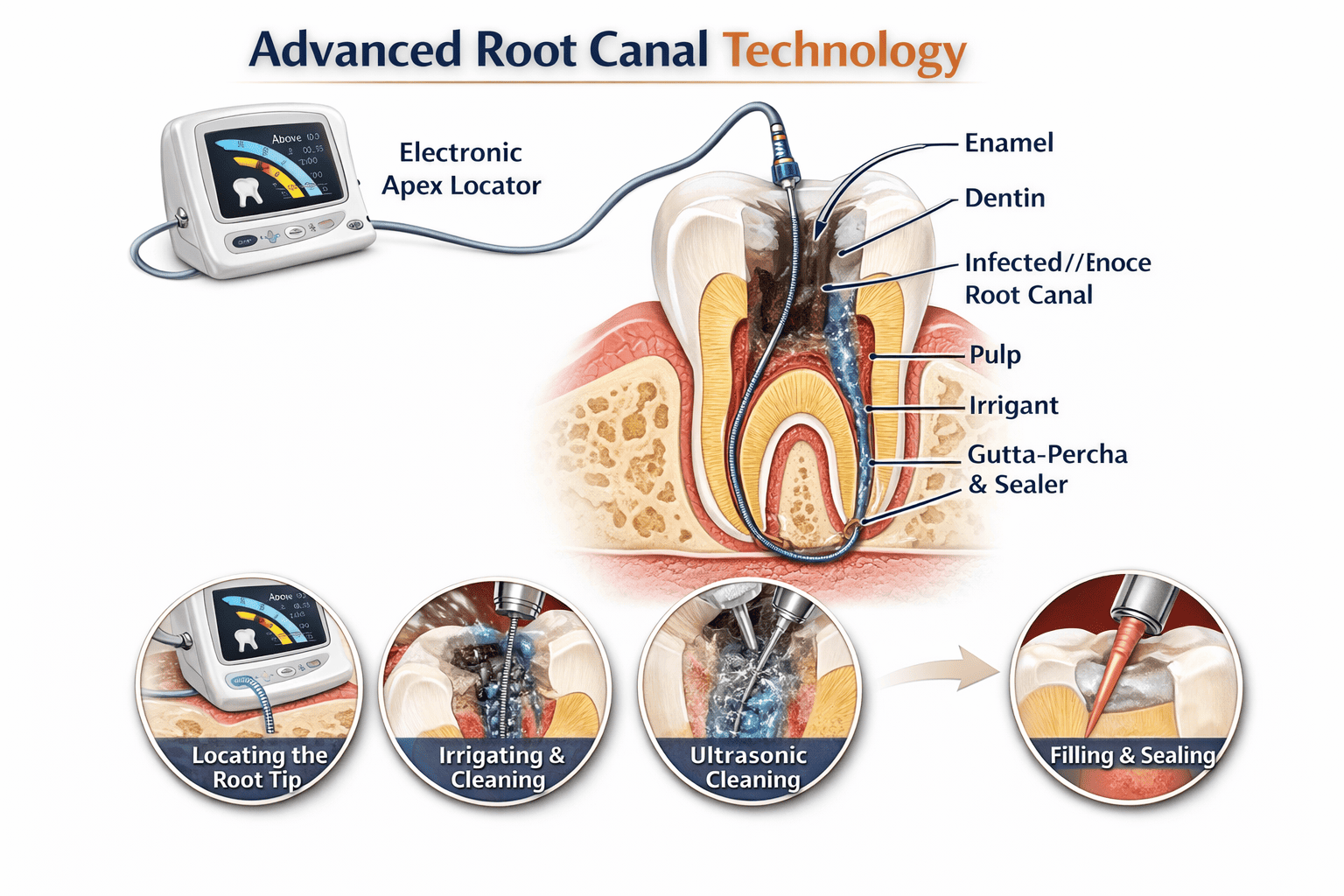
Advanced Root Canal Technology
Computerised Diagnosis
Digital X-rays and advanced imaging help accurately locate infected canals and ensure precise treatment.High Precision Instruments
Modern rotary instruments allow thorough cleaning with minimal discomfort and improved success rates.Benefits of Root Canal Treatment
- Relieves severe tooth pain
- Saves your natural tooth
- Prevents infection from spreading
- Restores normal chewing and biting
- Maintains natural smile and alignment
After Treatment Care
Just like natural teeth, root canal treated teeth require proper care:- Brush and floss regularly
- Avoid biting hard objects
- Visit the dentist for regular check-ups
- Get the recommended crown placed on time
Root canal treatment FAQ & Details of the Procedure
Root canal treatment is a dental procedure used to remove infected or damaged pulp from inside a tooth, clean the root canals, and seal them to prevent further infection. It helps save the natural tooth instead of removing it.
No. With modern anesthesia and advanced techniques, root canal treatment is usually painless. Most patients feel relief from pain after the procedure rather than discomfort.
You may need a root canal if you experience severe tooth pain, sensitivity to hot or cold, swelling of gums, discoloration of the tooth, or pain while chewing. A dental examination confirms the need.
A root canal treatment typically takes one or two visits, depending on the condition of the tooth and the extent of infection. Each session usually lasts 45 to 90 minutes.
After the procedure, the tooth is restored with a filling or crown to protect it. You can resume normal activities the same day, with mild sensitivity for a short period.
In most cases, yes. A crown strengthens the treated tooth and prevents fracture, especially for back teeth that are used for chewing.
With proper oral hygiene and regular dental check-ups, a root canal treated tooth can last a lifetime.
Root canal treatment is a safe and commonly performed procedure. Minor discomfort or temporary sensitivity may occur, but serious complications are rare when done by an experienced dentist.
Although success rates are high, failure can occur if canals are not completely cleaned, sealed, or if reinfection happens. Proper treatment and follow-up care greatly reduce this risk.
Maintain good oral hygiene by brushing and flossing daily, avoid chewing hard foods on the treated tooth until fully restored, and attend regular dental check-ups.
Rated ★★★★★ by Our Patients
Google Rating Score:5.0 of 5, based on 2079 Reviews
Posted onTrustindex verifies that the original source of the review is Google. I had filling treatment done in Sbm dental hospital by Dr Savinash and Dr Prathyusha, and my experience was excellent too goodPosted onTrustindex verifies that the original source of the review is Google. Excellent service. Highly recommend this dental clinic for all your dental needs.Posted onTrustindex verifies that the original source of the review is Google. Had a great experience for scaling and fillings treatment. The procedure was very smooth and comfortable. Doctor ensured I was relaxed throught clinic atmosphere is clean and well maintained and highly satisfied in kakinadaPosted onTrustindex verifies that the original source of the review is Google. I recently had a root canal treatment and tooth extraction done by dr. Savinash and i am very satisfied with the treatment the doctor was very patient kind and explained the entire procedure clearly before starting i was very nervous at furst but he made me feel comfortable and calm throught the process the root canal treatment was done smoothly with very minimal pain and the extraction was also handled carefully and professionally the clinic was clean and well maintained and the staff were friendly and supportive and i highly reccomeded the hospital in kakinadaPosted onTrustindex verifies that the original source of the review is Google. Very much satisfied with my wisdom teeth removal procedure by Dr. Savinash. He is really skilled and highly professional; effectively communicating crystal clear operative and post op information and instructions. He was very patient throughout, addressing all of my concerns and clarifying even the slightest of doubts. The staff was amazing and supportive. Will highly recommend Dr. Savinash to everyone thinking of getting dental procedures in Kakinada!Posted onTrustindex verifies that the original source of the review is Google. Excellent dental clinic! Doctors and staff are very friendly and professional clinic is clean and treatment was painless.i felt very comfortable. Highly recommendPosted onTrustindex verifies that the original source of the review is Google. ExcelentPosted onTrustindex verifies that the original source of the review is Google. Excellent treatment, and best hospital in kakinadaPosted onTrustindex verifies that the original source of the review is Google. I satisfied with all service I received.. Good and excellent servicePosted onTrustindex verifies that the original source of the review is Google. Excellent treatment, painless treatment, Dr.savinash garu