

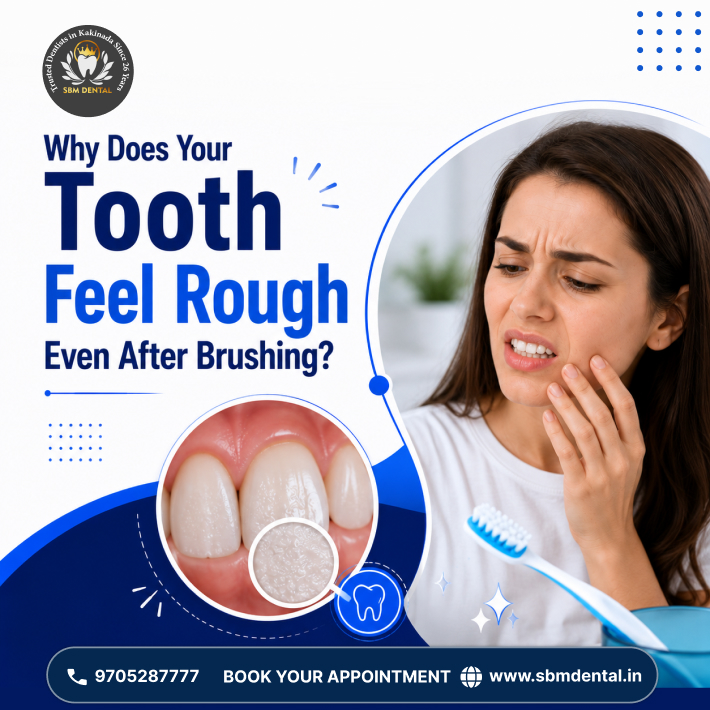
Why Does Your Tooth Feel Rough Even After Brushing?
You brush your teeth carefully, rinse your mouth, and run your tongue across your teeth. But one particular tooth still feels rough or uneven. You may brush again, thinking there is food or plaque left behind. If the sensation continues, however, there could be another reason. A rough tooth surface can sometimes be caused by plaque, tartar, enamel changes, decay, or damage to the tooth.
Why Does Your Tooth Feel Rough?
Teeth should generally feel smooth when you run your tongue over them. Changes to the surface can happen for several reasons.
Some common causes include:
- Plaque buildup
- Hardened tartar
- Tooth decay
- Enamel erosion
- Chipped enamel
- Worn dental fillings
- Teeth grinding
- Acidic foods and drinks
The cause may not always be obvious without a dental examination.
Signs You Shouldn't Ignore
Pay attention if the rough feeling is accompanied by:
- Tooth sensitivity
- Pain
- A visible chip
- Discolouration
- Food getting stuck
- Bad breath
- Bleeding gums
- A sharp edge on the tooth
These symptoms may suggest that the tooth needs professional attention
What Could Happen If You Ignore It?
A rough area may sometimes be harmless, but persistent changes should still be checked.
An untreated rough tooth surface may sometimes be associated with:
- Plaque accumulation
- Tooth decay
- Enamel wear
- Increased sensitivity
- Further tooth damage
- Difficulty cleaning the affected area
Getting the cause checked early can help prevent unnecessary complications.
How Can a Dentist Help?
Your dentist can examine the tooth and determine why its surface feels different.
Treatment may include:
- Professional dental cleaning
- Removal of tartar
- A dental filling
- Repair of a chipped tooth
- Treatment for tooth decay
- Advice about enamel protection
The treatment will depend on what is causing the roughness.
How to Keep Your Teeth Smooth and Healthy
Simple daily habits can help protect your tooth surfaces.
- Brush twice a day with fluoride toothpaste.
- Floss or clean between your teeth daily.
- Limit acidic drinks.
- Avoid brushing too aggressively.
- Drink water regularly.
- Limit frequent sugary snacks.
- Attend regular dental checkups.
If a rough tooth surface remains even after brushing, don’t keep trying to remove it yourself.
When Should You Visit a Dentist?
Book an appointment if:
- The rough feeling continues for several days.
- You notice a sharp edge.
- The tooth becomes sensitive.
- You notice a visible crack or chip.
- Food repeatedly gets stuck.
- You experience pain.
A dental examination can help identify the cause before the problem becomes more serious.
Conclusion
A tooth that feels rough after brushing may be caused by something as simple as plaque buildup, but it can also indicate tartar, enamel wear, decay, or damage. If you notice a persistent rough tooth surface, professional advice can help determine what is causing the change and whether treatment is needed. Book your appointment today and keep your smile healthy, clean, and comfortable.