

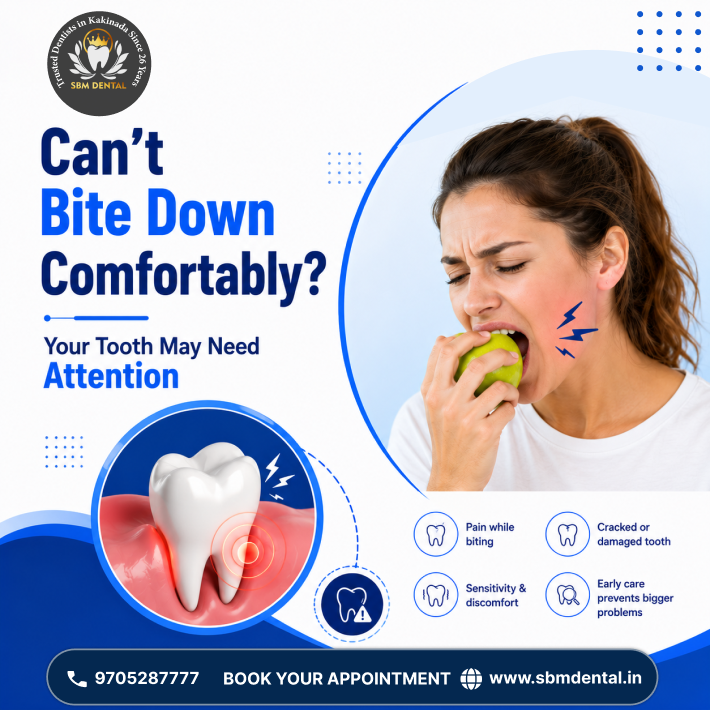
Can’t Bite Down Comfortably? Your Tooth May Need Attention
You take a bite of your favourite food and immediately notice something doesn’t feel right. Instead of biting down comfortably, one tooth feels painful or unusually sensitive. You may start chewing on the opposite side to avoid the discomfort. Pain when biting down can have several possible causes. While it may sometimes be temporary, recurring pain during chewing can indicate a dental problem that should be checked by a dentist.
Why Does Your Tooth Hurt When You Bite Down?
Your teeth are designed to withstand pressure from everyday chewing. If a tooth has been weakened, damaged, or affected by infection, normal biting pressure may cause discomfort.
Some common causes of pain when biting down include:
- Tooth decay
- Cracked or fractured teeth
- Dental abscess
- Inflamed tooth nerve
- Damaged dental fillings
- Gum infection
- Teeth grinding
- Problems with the tooth’s surrounding tissues
The cause can vary from one person to another, so a dental examination may be needed.
Signs You Shouldn't Ignore
You may also experience:
- Sharp pain while chewing
- Sensitivity to hot or cold
- Swelling near the tooth
- Pain that continues after biting
- A cracked or chipped tooth
- Bad taste in your mouth
- Tender gums
- Difficulty eating
These symptoms can indicate that the affected tooth needs professional attention.
What Could Happen If You Ignore It?
Some people adapt by chewing on the opposite side and assume the problem will disappear. Unfortunately, the underlying cause may continue to develop.
Ignoring pain when biting down may allow problems such as:
- Tooth decay
- Infection
- Tooth fractures
- Nerve damage
- Gum problems
- Difficulty eating
- More complicated dental treatment
Early diagnosis can help protect the tooth and reduce the risk of further damage.
How Can a Dentist Help?
Your dentist will examine the affected tooth and surrounding tissues to identify the cause.
Depending on the diagnosis, treatment may include:
- Dental fillings
- Treatment for tooth decay
- Professional cleaning
- Root canal treatment
- Dental crown
- Repair of a damaged restoration
- Treatment for gum disease
The sooner the cause is identified, the sooner suitable treatment can be considered.
How to Protect Your Teeth
You can reduce your risk of dental problems with simple daily habits.
- Brush twice a day with fluoride toothpaste.
- Clean between your teeth daily.
- Avoid chewing ice or very hard foods.
- Limit sugary foods and drinks.
- Wear a mouthguard if recommended for teeth grinding.
- Attend regular dental checkups.
- Never ignore recurring discomfort when chewing.
If you regularly experience pain when biting down, arrange a dental examination to find out what is causing it.
When Should You Visit a Dentist?
Book an appointment if:
- Pain occurs every time you bite.
- The pain continues after eating.
- You notice swelling around the tooth.
- Your tooth becomes sensitive.
- You have difficulty chewing.
- The tooth appears cracked or damaged.
- You develop severe or persistent pain.
Prompt treatment can help prevent the condition from becoming more serious.
Conclusion
Biting and chewing should not be painful. If one tooth consistently hurts whenever you put pressure on it, there may be an underlying issue such as decay, a crack, infection, or a damaged filling. Don’t ignore pain when biting down, especially if it keeps returning or is accompanied by swelling or sensitivity. A dental examination can help identify the cause and protect your natural tooth. arrange a dental checkup rather than trying to manage the situation yourself.