


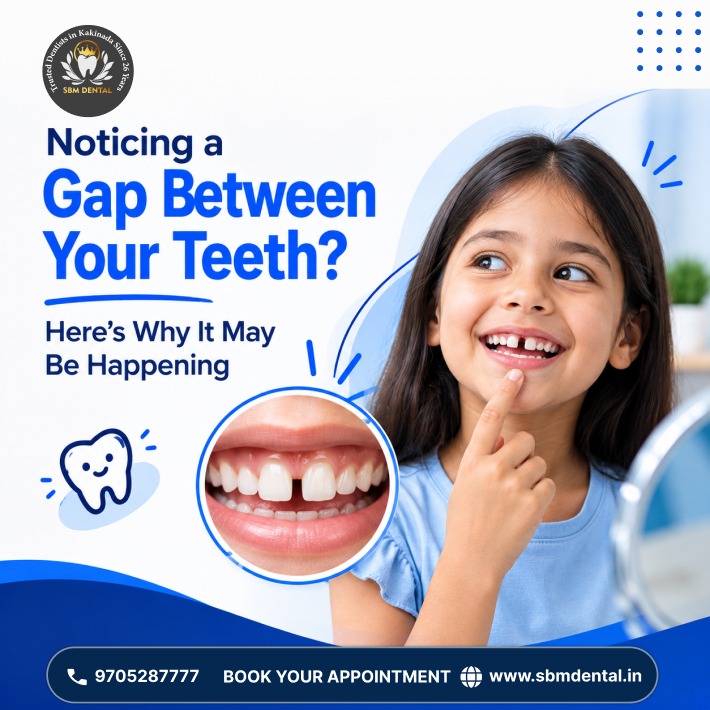
Noticing a Gap Between Your Teeth? Here’s Why It May Be Happening
You look in the mirror one morning and notice that your teeth don’t look quite the same. There seems to be a small space between two teeth that you hadn’t noticed before. A gap between teeth can be natural for some people, while a new or increasing gap may sometimes indicate changes in your gums, teeth, or bite.
Why Do Gaps Develop Between Teeth?
The spaces between teeth can develop for several different reasons.
Some common causes include:
- Natural tooth development
- Changes in the gums
- Gum disease
- Missing teeth
- Teeth shifting position
- Tongue-thrusting habits
- Changes in the bite
- Small or differently shaped teeth
Not every gap requires treatment, but a new gap should be assessed if it appears unexpectedly.
Signs You Shouldn't Ignore
A gap may be accompanied by other changes, including:
- Bleeding gums
- Swollen gums
- Gum recession
- Loose teeth
- Food getting trapped
- Changes in your bite
- Tooth movement
- Bad breath
These symptoms can sometimes indicate an underlying gum or dental problem.
What Could Happen If You Ignore It?
If the space is caused by an underlying dental condition, simply accepting the change may allow the problem to progress.
An untreated gap between teeth may sometimes be associated with:
- Further tooth movement
- Gum problems
- Food trapping
- Difficulty cleaning certain areas
- Changes in your bite
- Increased risk of dental problems
Early assessment can help determine whether treatment is necessary.
How Can a Dentist Help?
Your dentist will assess the teeth, gums, and bite to understand why the space has developed.
Depending on the cause, treatment options may include:
- Professional cleaning
- Treatment for gum disease
- Orthodontic treatment
- Aligners
- Restorative dental treatment
- Replacement of missing teeth
The best option will depend on your individual dental needs.
How to Protect Your Smile
You can help maintain healthy teeth and gums by following good oral hygiene habits.
- Brush twice a day.
- Clean between your teeth every day.
- Avoid smoking or tobacco products.
- Limit sugary foods and drinks.
- Attend regular dental checkups.
- Do not ignore changes in tooth position.
If you notice a new gap between teeth, a dental checkup can help determine why it has appeared.
When Should You Visit a Dentist?
Book an appointment if:
- A new gap has appeared.
- An existing gap is becoming larger.
- Your teeth feel loose.
- Your gums bleed or swell.
- Food regularly gets trapped.
- Your bite has changed.
Early assessment may help identify the cause and suitable treatment.
Conclusion
Some gaps between teeth are completely natural, while others can develop because of changes in the gums, tooth position, or bite. A new or widening space should not automatically be ignored. If you notice a gap between teeth that was not there before, speak to your dentist. Finding the cause early can help protect your teeth and gums. Book your appointment today and discover the right care for your smile.