

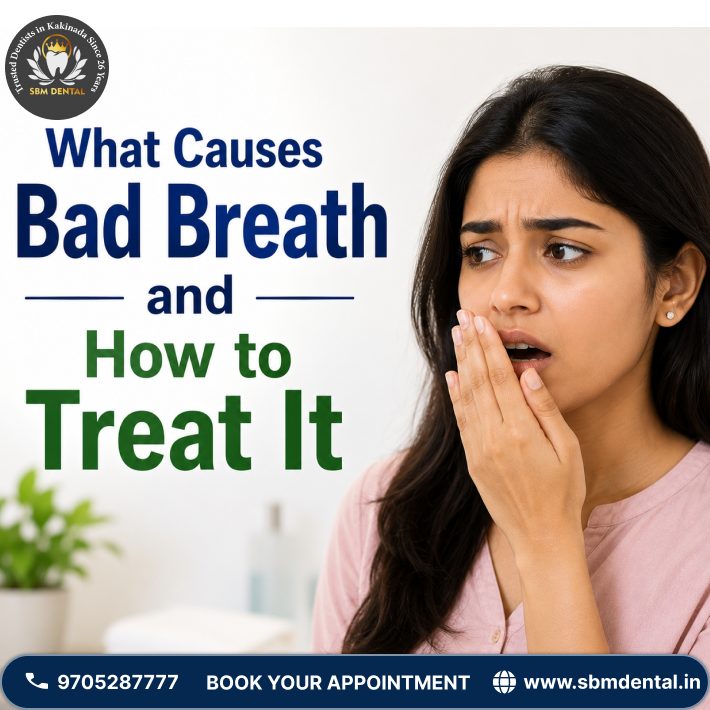
What Causes Bad Breath and How to Treat It
Have you ever been in a conversation and suddenly wondered if your breath was fresh? Bad breath, also known as halitosis, is a common problem that can affect anyone. While it may seem like a temporary issue, persistent bad breath can sometimes indicate an underlying dental or health condition. The good news is that most cases can be managed with proper oral care and the right Bad Breath Treatment. Understanding what causes bad breath is the first step toward maintaining a healthier and more confident smile.
What Causes Bad Breath?
Bad breath doesn’t always come from the food you eat. In many cases, it develops because of bacteria that build up inside the mouth.
Some of the most common causes include:
- Poor oral hygiene
- Food particles trapped between teeth
- Gum disease
- Tooth decay
- Dry mouth
- Smoking or tobacco use
- Certain medical conditions
Identifying the exact cause helps determine the most suitable Bad Breath Treatment.
Signs That Bad Breath May Need Attention
Occasional bad breath is normal, especially after eating certain foods. However, you should pay attention if you notice:
- Bad breath that doesn’t go away after brushing
- A constant unpleasant taste in your mouth
- Dry mouth
- Bleeding gums
- White coating on the tongue
These symptoms may indicate an underlying dental issue that requires professional care.
How Is Bad Breath Treated?
The right treatment depends on the cause. After a dental examination, your dentist may recommend a personalized Bad Breath Treatment plan.
Improve Oral Hygiene
Brush your teeth twice a day using fluoride toothpaste and clean your tongue regularly to remove bacteria.
Floss Every Day
Flossing removes food particles and plaque from areas your toothbrush cannot reach.
Stay Hydrated
Drinking plenty of water helps prevent dry mouth, which is one of the common causes of bad breath.
Treat Gum Disease or Tooth Decay
If gum disease or cavities are responsible, treating these conditions can significantly improve your breath.
Schedule Professional Dental Cleaning
Regular cleanings remove plaque and tartar buildup that contribute to unpleasant mouth odor.
Daily Habits That Help Keep Your Breath Fresh
Simple lifestyle changes can make a noticeable difference:
- Drink plenty of water
- Brush your tongue daily
- Limit sugary foods
- Avoid tobacco products
- Replace your toothbrush every three months
- Visit your dentist regularly
Following these habits can reduce bacteria in the mouth and support long-term oral health.
When Should You Visit a Dentist?
If bad breath continues despite maintaining good oral hygiene, it’s important to seek professional advice.
Consult a dentist if you experience:
- Persistent bad breath
- Bleeding or swollen gums
- Loose teeth
- Tooth pain
- Dry mouth that doesn’t improve
Early diagnosis helps identify the cause and allows for effective Bad Breath Treatment before the problem worsens.
Can Bad Breath Be Prevented?
Yes. Most cases of bad breath can be prevented by maintaining good oral hygiene and making healthy lifestyle choices. Regular brushing, flossing, drinking enough water, and scheduling routine dental checkups are some of the best ways to keep your mouth clean and your breath fresh.
Conclusion
Bad breath can affect your confidence, but it is often a treatable condition. Whether it is caused by poor oral hygiene, gum disease, or other factors, early care can make a significant difference. Choosing the right Bad Breath Treatment and following healthy oral care habits can help eliminate unpleasant odors and improve your overall dental health. If bad breath persists, consulting a dental professional is the best way to identify the cause and restore your confidence. Book your appointment today and discover the benefits of a confident, beautiful smile!