


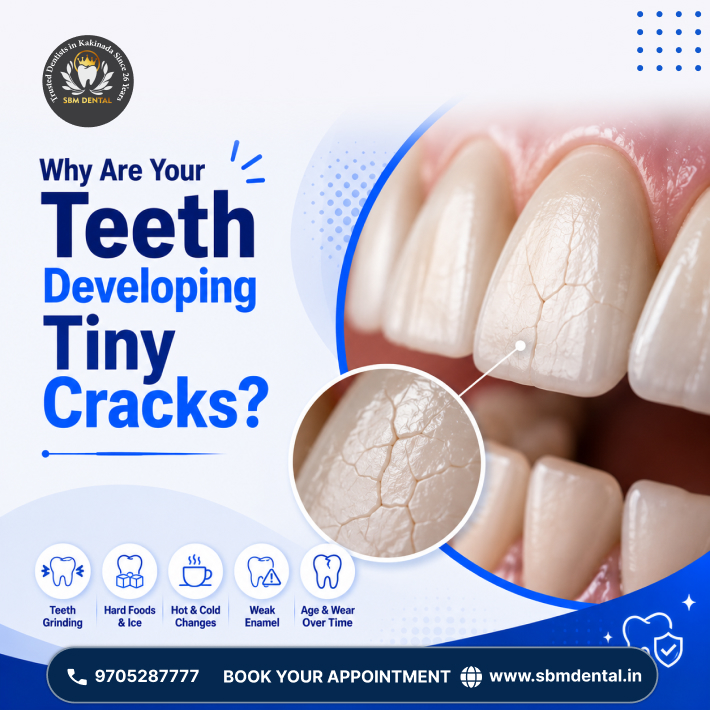
Why Are Your Teeth Developing Tiny Cracks?
You look closely at your teeth and notice a thin line running across the surface. It may look like a tiny crack, and you may wonder whether it is something to worry about. Some small lines on teeth can be superficial and harmless, but other cracks may extend deeper into the tooth. Tiny cracks in teeth should therefore be assessed if they are accompanied by pain, sensitivity, or other changes.
Why Do Teeth Develop Tiny Cracks?
Teeth are strong, but repeated pressure can cause small fractures or surface lines.
Some possible causes include:
- Teeth grinding
- Clenching
- Biting hard foods
- Chewing ice
- Sudden temperature changes
- Previous dental treatment
- Injury to the mouth
- Natural wear over time
A dentist can determine whether a visible line is superficial or requires treatment.
Signs You Shouldn't Ignore
A crack may be more concerning if you experience:
- Sharp pain when biting
- Pain when releasing your bite
- Sensitivity to hot or cold
- Pain that comes and goes
- A visible fracture
- Swelling around the tooth
- A chipped piece of tooth
These symptoms should be assessed by a dental professional.
What Could Happen If You Ignore It?
Some cracks remain small, while others can gradually extend deeper into the tooth.
Untreated tiny cracks in teeth may potentially lead to:
- Increased sensitivity
- Tooth fractures
- Pain while chewing
- Damage to the inner tooth
- Infection
- Difficulty eating
- Loss of tooth structure
Early assessment can help your dentist determine how serious the crack is.
How Can a Dentist Help?
Your dentist will examine the tooth and may recommend additional tests or imaging depending on the situation.
Treatment can vary and may include:
- Monitoring a superficial crack
- Dental bonding
- A dental filling
- A dental crown
- Treatment for an infected tooth
- Root canal treatment when necessary
The appropriate treatment depends on the depth and location of the crack.
How to Protect Your Teeth
You can reduce the risk of tooth damage by following a few simple habits.
- Avoid chewing ice.
- Do not bite extremely hard objects.
- Avoid using your teeth to open packages.
- Wear a mouthguard if recommended.
- Manage teeth grinding with professional advice.
- Maintain good oral hygiene.
- Attend regular dental checkups.
If you notice tiny cracks in teeth, avoid repeatedly testing the tooth by biting hard foods.
When Should You Visit a Dentist?
Book an appointment if:
- You can see a crack in your tooth.
- You experience pain while biting.
- Your tooth becomes sensitive.
- A piece of the tooth breaks away.
- Your gum becomes swollen.
- The pain is persistent or worsening.
Prompt dental care may help prevent further damage.
Conclusion
Not every visible line on a tooth is a serious crack, but changes in your teeth should not be ignored when they are accompanied by pain or sensitivity. Grinding, hard foods, injuries, and everyday wear can all contribute to tooth cracks. If you notice tiny cracks in teeth, a dental examination can help determine whether the crack is superficial or requires treatment. Book your appointment today and protect your smile before a small crack becomes a bigger problem.