


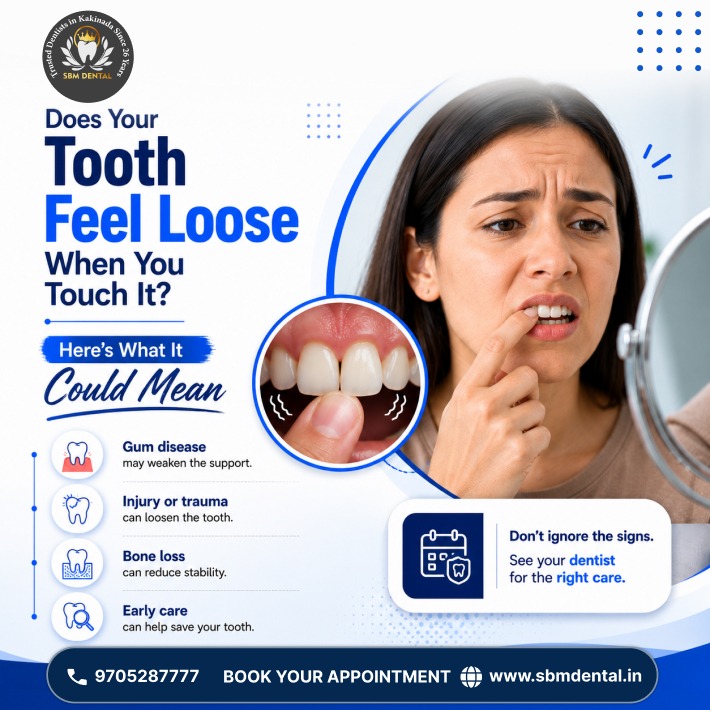
Does Your Tooth Feel Loose When You Touch It? Here’s What It Could Mean
You run your tongue over your teeth and suddenly notice something unusual. One tooth seems to move slightly when you touch it. At first, you may think it is nothing serious, especially if there is no pain. However, adult teeth are not normally expected to move. A loose tooth in adults can sometimes be a warning sign of an underlying dental problem that needs professional attention.
Why Does Your Tooth Feel Loose?
Your teeth are held firmly in place by the surrounding bone, gums, and supporting tissues. If these structures become damaged or weakened, a tooth may start to feel mobile.
Some common causes include:
- Gum disease
- Injury to the mouth
- Teeth grinding or clenching
- Tooth infection
- Advanced tooth decay
- Weakened supporting bone
- Excessive pressure on the tooth
A loose tooth should not simply be ignored, particularly if the movement is increasing.
Signs You Shouldn't Ignore
You may notice other symptoms along with tooth movement, such as:
- Bleeding gums
- Swollen or red gums
- Pain while chewing
- Gum recession
- Bad breath
- Tooth sensitivity
- Changes in your bite
- Increasing tooth movement
These symptoms may indicate that the tooth needs professional assessment.
What Could Happen If You Ignore It?
Many people avoid visiting the dentist because the tooth does not hurt. Unfortunately, the absence of pain does not necessarily mean there is no problem.
An untreated loose tooth in adults may be associated with:
- Progressing gum disease
- Bone loss around the tooth
- Difficulty chewing
- Further tooth movement
- Tooth loss
- More complex dental treatment
Early diagnosis can give your dentist a better opportunity to protect the affected tooth.
How Can a Dentist Help?
Your dentist will examine your tooth, gums, and surrounding tissues to determine why the tooth is moving.
Depending on the cause, treatment may include:
- Professional dental cleaning
- Treatment for gum disease
- Repair of a damaged tooth
- Treatment for infection
- A mouthguard if teeth grinding is contributing
- Other restorative or periodontal treatment
The appropriate treatment depends on the condition of your tooth and supporting tissues.
How to Protect Your Teeth
Good oral hygiene can help protect your gums and the structures supporting your teeth.
- Brush twice a day with fluoride toothpaste.
- Clean between your teeth daily.
- Avoid chewing very hard foods.
- Do not try to pull or move the tooth yourself.
- Wear a mouthguard if recommended.
- Visit your dentist regularly.
- Never ignore changes in tooth movement.
If you notice a loose tooth in adults, arranging a dental examination is an important step towards protecting your smile.
When Should You Visit a Dentist?
Book a dental appointment if:
- Your tooth moves when touched.
- The movement is getting worse.
- Your gums bleed regularly.
- You experience pain while chewing.
- Your gums appear swollen or receding.
- You notice changes in your bite.
Prompt treatment may help prevent further damage.
Conclusion
A tooth that feels loose when you touch it should not be considered normal in an adult. Gum disease, injury, grinding, infection, and other dental problems can affect the structures that hold your teeth in place. If you notice a loose tooth in adults, do not wait until the tooth becomes painful. A professional examination can help identify the cause and determine the most suitable treatment. Book your appointment today and take the first step towards protecting your natural teeth.