


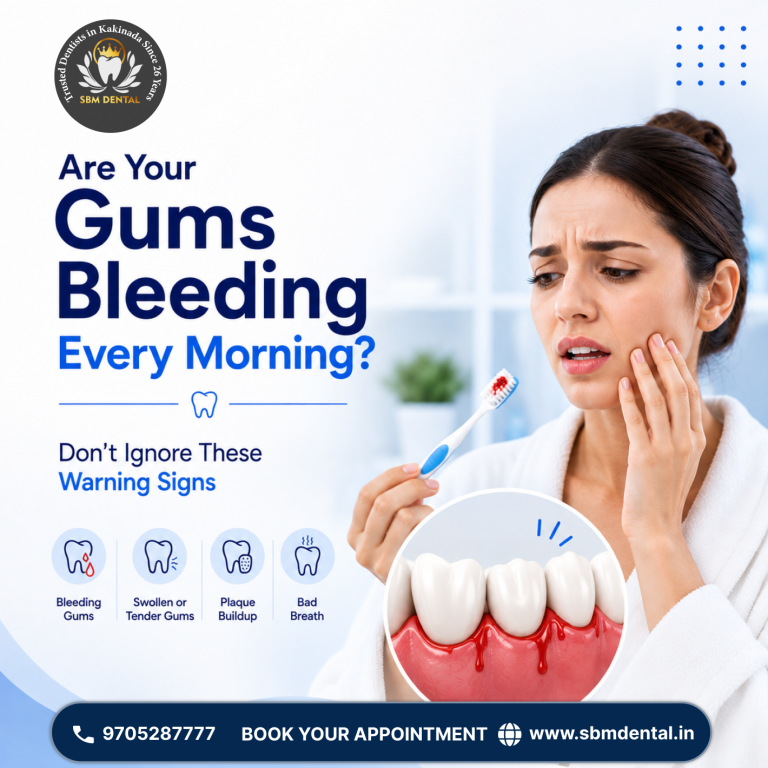
Are Your Gums Bleeding Every Morning? Don’t Ignore These Warning Signs
You wake up, brush your teeth, and notice a little blood when you spit. Maybe you rinse your mouth and move on, thinking it is nothing serious. The next morning, it happens again. Soon, you start wondering, “Why do my gums bleed every time I brush?” Occasional bleeding may seem harmless, but repeated bleeding can be a sign that your gums need attention. Understanding the cause and getting timely Bleeding Gums Treatment can help prevent the problem from becoming more serious.
Why Are Your Gums Bleeding?
Healthy gums generally should not bleed regularly during brushing or flossing. Persistent bleeding can happen when plaque builds up around the teeth and irritates the gums.
Common causes include:
- Plaque and tartar buildup
- Gum inflammation
- Brushing too hard
- Poor flossing habits
- Gum disease
- Vitamin deficiencies or certain health conditions
- Ill-fitting dental appliances
If bleeding keeps returning, professional evaluation can help identify the right Bleeding Gums Treatment.
When Morning Bleeding Becomes a Warning Sign
You may initially notice only a small amount of blood. But pay attention if you also experience:
- Red or swollen gums
- Tenderness while brushing
- Persistent bad breath
- Gums that bleed while eating
- Gum recession
- Loose or sensitive teeth
These symptoms should not simply be ignored. They may indicate a developing gum problem that requires dental care.
What Happens If You Ignore Bleeding Gums?
It is easy to think, “It doesn’t hurt, so it can’t be serious.” However, gum problems can progress quietly.
Continued plaque and tartar buildup may cause increasing gum inflammation and, in advanced cases, affect the tissues and bone supporting your teeth.
Getting appropriate Bleeding Gums Treatment early can help control the problem and protect your natural teeth.
How Can Bleeding Gums Be Treated?
Treatment depends on what is causing the bleeding. Your dentist may recommend:
Professional Dental Cleaning
If plaque and tartar have accumulated, professional cleaning can help remove deposits that regular brushing cannot.
Better Brushing and Flossing
Using a soft-bristled toothbrush and gentle brushing techniques can help protect irritated gums. Daily flossing also removes plaque between teeth.
Gum Disease Treatment
If gum disease is responsible, your dentist may recommend a more specific treatment plan based on the condition of your gums.
The right Bleeding Gums Treatment can help reduce inflammation and improve gum health.
Simple Habits to Protect Your Gums
You don’t have to wait until your gums start hurting to take care of them.
- Brush twice a day with fluoride toothpaste.
- Floss or clean between your teeth daily.
- Use a soft-bristled toothbrush.
- Avoid tobacco products.
- Drink enough water.
- Schedule regular dental checkups.
- Don’t ignore recurring gum bleeding.
Small changes in your daily routine can make a big difference to your gum health.
When Should You Visit a Dentist?
If your gums bleed regularly for several days or you notice swelling, pain, persistent bad breath, or loose teeth, schedule a dental examination.
Don’t wait for bleeding to become severe before seeking help. Early assessment can identify the cause and help determine the most suitable Bleeding Gums Treatment.
Conclusion
Seeing blood while brushing every morning shouldn’t become something you simply accept as normal. Your gums may be showing you an early warning sign that deserves attention. Whether the cause is plaque buildup, irritation, or gum disease, timely Bleeding Gums Treatment can help protect your gums and keep your smile healthy. If your gums are bleeding regularly, don’t ignore the warning signs. At SDM Dental, our dental team can identify the cause and provide suitable Bleeding Gums Treatment to protect your gums and teeth. Contact us today to book your dental consultation and take the first step toward healthier gums.